


- EN
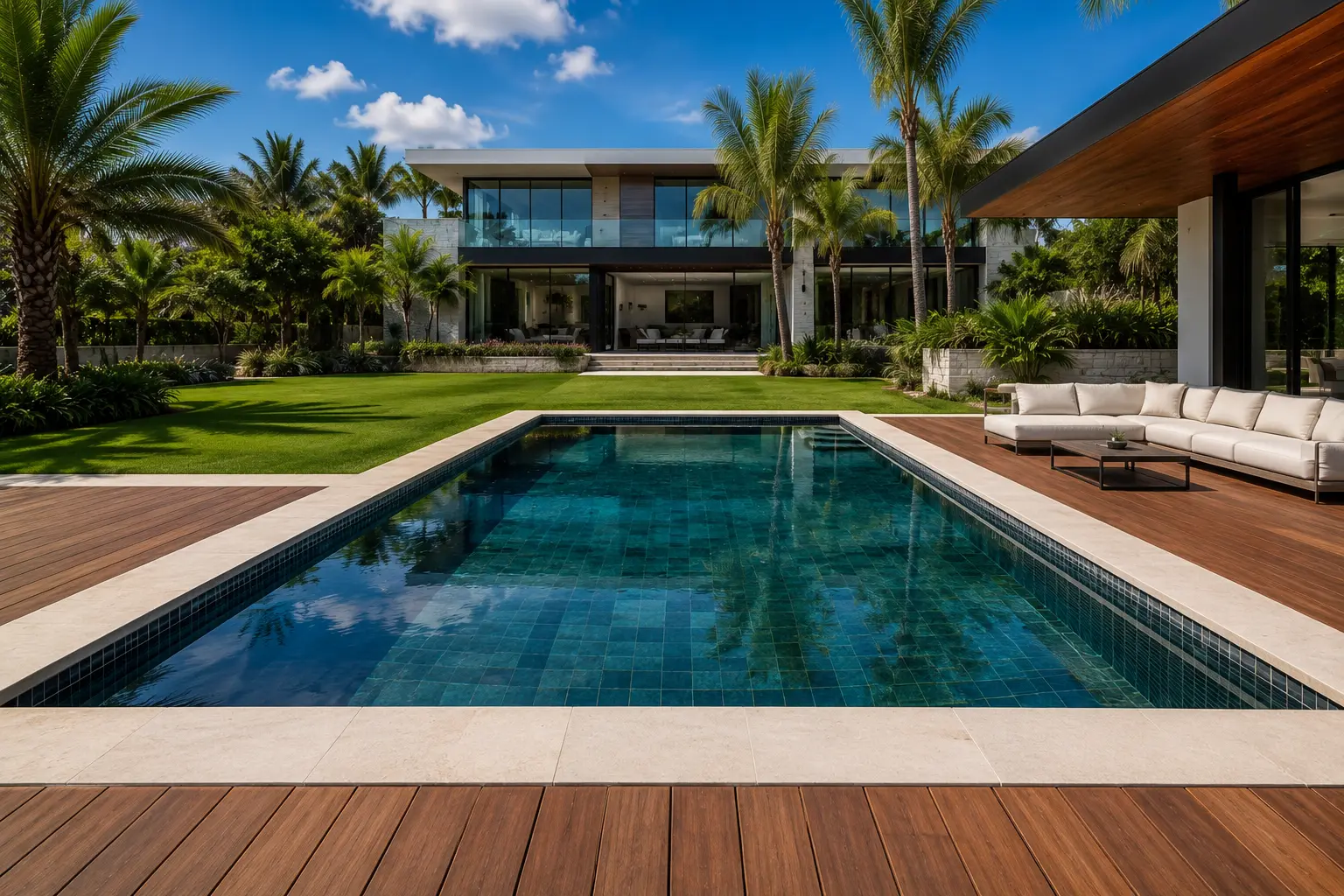

On hot days, having your own swimming pool is not only about entertainment, but also an ideal place for peace and relaxation. However, for a pool to provide comfort and safety, choosing the right location, quality construction, and proper ongoing maintenance are essential.
In this article, we will take a detailed look at swimming pool construction standards, dimensions, reinforced concrete construction, the technical room, finishing, filtration, and the factors that affect the cost of swimming pool construction .
If you already have a swimming pool, you may also find this article useful: Swimming Pool Water Care – How to Maintain Your Pool , To estimate the approximate maintenance cost, you can use the Pool Maintenance Calculator .
When building a swimming pool, size and appearance are not the only important factors.
The final result is affected by soil conditions, reinforced concrete construction, waterproofing, the filtration system, the technical room, and the area surrounding the pool.
If the pool is part of the overall design of a private house, the yard and building layout should be planned together. You can also read about Private House Construction .
The location of the pool is one of the first and most important decisions.
A poorly chosen location can later increase both construction and maintenance costs.
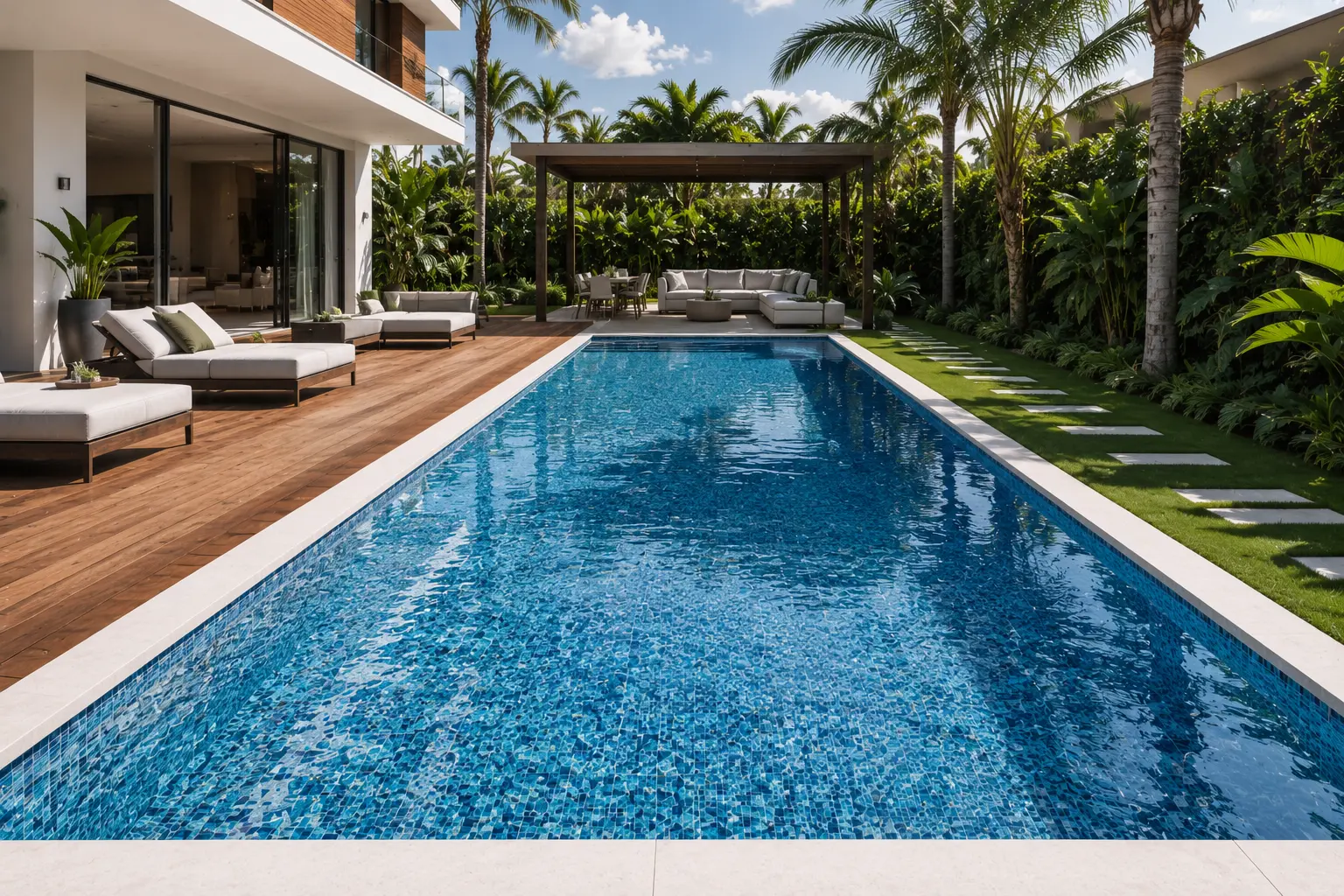
The size and shape depend on the size of the yard, the intended use, the budget, and the design.
For a private house, the following dimensions are often practical:
If the pool will also be used by children, planning zones with different depths in advance is important.
Accuracy is essential during excavation. You should determine in advance the finished pool level, the location of the technical room, and the water drainage directions.
The excavation pit is usually made larger than the final internal pool dimensions, because additional space is required for wall construction and for working around the structure.
Before starting the concrete structure, proper foundation preparation and groundwater management are important.
The specific drainage solution should be adapted to the site conditions.
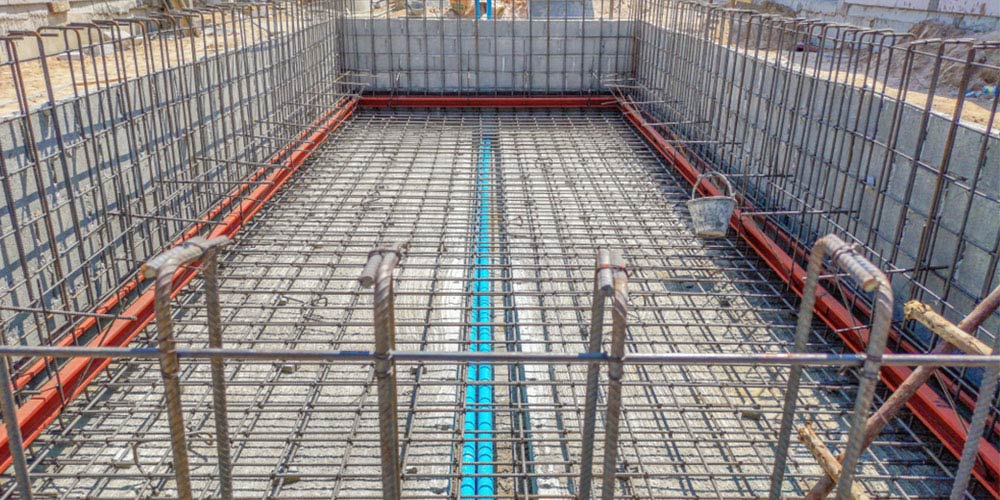
The reinforced concrete structure of the pool floor and walls requires properly designed reinforcement.
The rebar diameter and layout should be selected according to the specific project and structural calculations.
Concreting the pool floor and walls is one of the most critical stages.
The concrete grade, thicknesses, and waterproofing solution must comply with the project requirements.
If you plan to build a reinforced concrete staircase, its location and structure should preferably be finalized before concrete work begins.
If the pool is being planned together with house construction, you can estimate the overall project budget in advance with the help of the House Construction Calculator .
The technical room is the center of the pool systems. It usually houses the pump, filter, control system, and other equipment.
The technical room should be:
The filtration system layout should be planned before concrete work, so that pipes and built-in components are installed in the correct locations.
A liner is a relatively economical and quick solution.
When installed properly, it serves both a decorative and waterproofing function.
Mosaic and tile create a more premium appearance, but require careful surface preparation, the appropriate adhesive, grout, and precise workmanship.
The finish around the pool perimeter should not only look good, but also be safe.
The surface should preferably be slip-resistant.
A drainage system is also important, so that rainwater and water overflowing from the pool do not accumulate or damage the surrounding area.
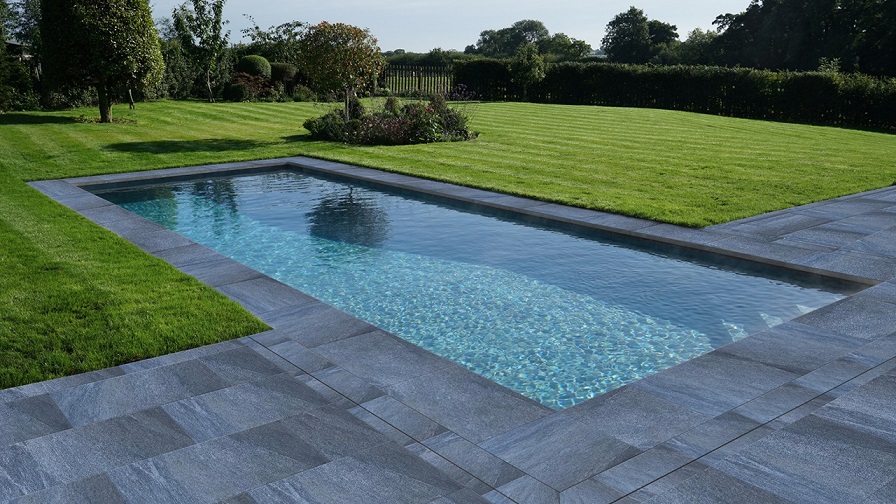
These components determine the pool price and the final budget.
After pool construction is completed, regular monitoring of the filtration system, water quality, walls, and pool floor is important.
You can read more in How to Maintain Swimming Pool Water , and use the following tool to estimate maintenance costs: Pool Maintenance Cost .
The cost of a swimming pool cannot be accurately determined simply by multiplying by square meters.
Depth, the volume of reinforced concrete, waterproofing, finishing, and the filtration system have a major impact on the final budget.
For a more detailed estimate, use the Swimming Pool Construction Price – Pool Calculator .
Calculate your pool construction cost for free
Datvale's Pool Calculator shows materials, labor and the total price with 2026 prices in 2 minutes.
Pool Calculator → All calculatorsA single fixed price is not accurate, because depth, construction, finishing, and the technical system can significantly change the final cost.
In most cases, a liner is a more economical initial option, while mosaic requires more auxiliary materials and more labor.
Yes. Without circulation and a filtration system, maintaining water quality is practically impossible.
Usually, yes, because it requires additional channels, a balance tank, and a more complex technical system.
No. Heating is an optional feature, but it extends the swimming season and provides a more stable water temperature.
Enter the pool dimensions, depth, and finish type to receive a detailed estimated cost breakdown.
Swimming Pool Construction Price – Full Calculator →