


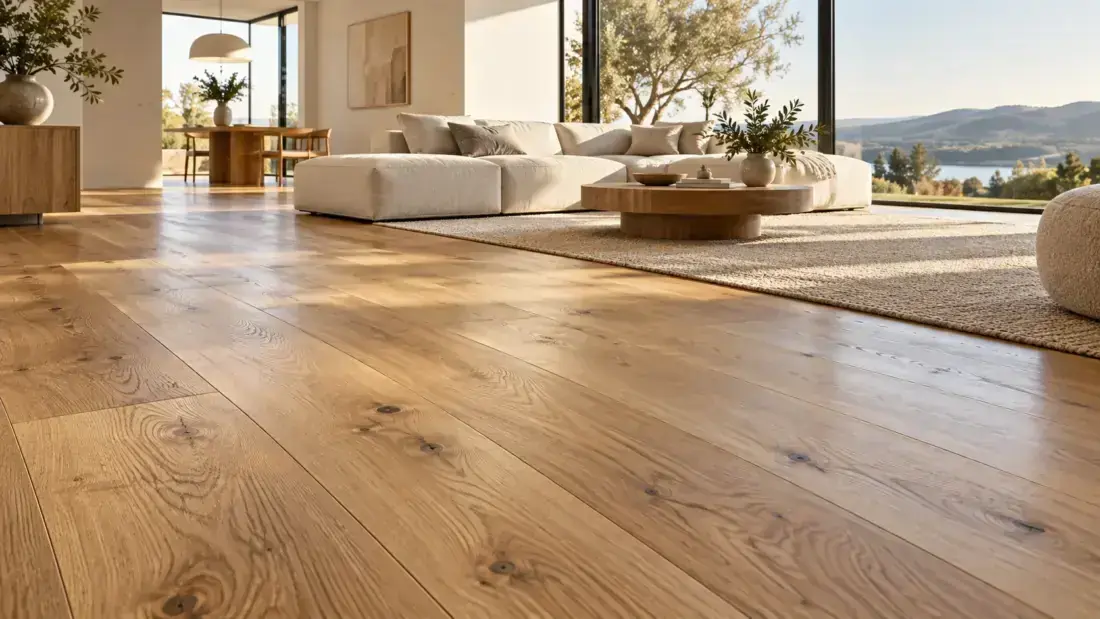

Choosing three-layer engineered parquet flooring is an important decision when you want the natural appearance of wooden flooring together with a stable and practical construction. Three-layer engineered parquet consists of multiple layers, and selecting the right product requires considering the top wood layer, overall thickness, wood species, surface finish, and installation system.
Understanding how to choose three-layer engineered parquet makes it easier to find flooring that matches a particular room, your budget, and the conditions of everyday use.
How to Choose Three-Layer Engineered Parquet
The answer to how to choose three-layer engineered parquet depends on more than color alone. Several technical and practical characteristics should be evaluated together.
- Wood species;
- Thickness of the natural wood top layer;
- Overall flooring thickness;
- Surface finish;
- Board locking or connection system;
- Installation method;
- Expected room traffic;
- Interior design style.
What Is Three-Layer Engineered Parquet?
Three-layer engineered parquet is a multilayer wooden flooring product. Its upper surface consists of a decorative natural wood layer, while the lower layers provide additional structural stability.
Because of this construction, engineered parquet can preserve the appearance of natural wooden flooring while offering different technical characteristics compared with traditional solid wood parquet.
Advantages of Three-Layer Engineered Parquet
The advantages of three-layer engineered parquet become especially relevant when you want to combine the appearance of natural wood with a relatively stable multilayer structure.
The main advantages include:
- Natural wood surface;
- Multilayer board construction;
- Wide range of designs and finishes;
- Compatibility with different installation systems;
- Potential for long-term use with proper maintenance.
Why Is the Top Wood Layer Important?
One of the most important specifications when selecting three-layer engineered parquet is the thickness of the natural wood top layer.
This is the visible part of the flooring that receives everyday wear. Its thickness and quality can influence both the floor's appearance and whether refinishing may be possible in the future.
Oak, Beech, or Another Wood Species?
Wood species influence the color, texture, and overall visual character of the flooring.
Oak is one of the most popular choices and is frequently selected for both modern and classic interiors. Other available species may include beech, acacia, walnut, and various additional woods.
When making a decision, consider not only appearance but also the technical specifications of the particular product.
Three-Layer Engineered Parquet vs Laminate Flooring
The comparison three-layer engineered parquet vs laminate flooring is very common, but these two products are significantly different.
Three-layer engineered parquet has a natural wood top layer, while laminate flooring uses a surface produced with different materials and manufacturing technology.
As a result, these flooring types can differ in appearance, feel, maintenance requirements, and price.
If natural wood is your main priority, three-layer engineered parquet may be an attractive option. If budget and practical maintenance are more important, laminate flooring may also be suitable.
To estimate laminate installation costs, use the Laminate Flooring Cost Calculator .
Three-Layer Engineered Parquet vs Traditional Parquet
Traditional parquet and three-layer engineered parquet are both wooden flooring solutions. However, their construction and installation methods can differ significantly.
Installing individual pieces of traditional parquet and finishing the surface afterward may require more labor, while engineered parquet is often sold with a prefinished surface.
To estimate the cost of traditional parquet installation, use the Parquet Installation Cost Calculator .
What Thickness of Engineered Parquet Should You Choose?
The total thickness of three-layer engineered parquet varies between products. Choosing flooring based only on thickness is not recommended.
It is important to evaluate the natural wood top layer, board construction, installation system, and the conditions in which the flooring will be used.
Glue-Down or Floating Installation?
Different installation methods may be available depending on the selected engineered parquet product.
Some systems are installed by gluing the flooring directly to the subfloor, while others allow floating installation.
The final choice should be based on the manufacturer's requirements and the condition of the subfloor.
Why Is Proper Subfloor Preparation Important?
Even high-quality engineered parquet flooring may not perform correctly if the subfloor has not been prepared properly.
Before installation, check the surface for levelness, strength, cleanliness, and moisture conditions.
The required specifications may vary depending on the selected flooring and installation method.
Estimate Your Engineered Parquet Flooring Costs
Enter your floor area and explore Datvale's flooring calculators to plan approximate material and installation expenses.
Explore Flooring Calculators →How to Maintain Three-Layer Engineered Parquet
Proper maintenance of three-layer engineered parquet is important for keeping the natural wood surface in good condition over time.
Recommended maintenance practices include:
- Avoid leaving excessive water on the flooring surface.
- Use cleaning products designed for wooden floors.
- Place protective pads under furniture legs.
- Remove sand and hard particles regularly.
- Follow the manufacturer's maintenance recommendations.
To explore flooring-related planning tools, visit Datvale's Flooring Calculators .
Can Three-Layer Engineered Parquet Be Refinished?
Some three-layer engineered parquet floors can be refinished. However, this depends directly on the thickness of the natural wood top layer and the construction of the specific product.
Before sanding or performing another intensive surface treatment, it is essential to determine whether the flooring is suitable for refinishing.
To explore flooring restoration and installation planning, use the Flooring Calculators .
Choosing the Right Engineered Parquet Color
When selecting a color, consider the room size, natural lighting, wall colors, furniture, and overall interior style.
Lighter wood tones often make a room feel brighter and more spacious, while darker finishes can create stronger contrast and a more distinctive visual effect.
Common Mistakes When Choosing Engineered Parquet
Choosing three-layer engineered parquet flooring based only on appearance is not recommended.
Common mistakes include:
- Ignoring the thickness of the natural wood top layer;
- Failing to inspect the condition of the subfloor;
- Choosing an unsuitable installation method;
- Overlooking room conditions;
- Ignoring maintenance requirements;
- Making a decision based only on price.
How to Plan Your Engineered Parquet Flooring Budget
The total cost of installing three-layer engineered parquet may include the flooring material, adhesive or other accessories, installation labor, and additional preparation work.
For this reason, it is better to estimate the full project budget before purchasing materials, rather than looking only at the price per square meter.
Datvale.ge provides Flooring Calculators that can help you compare flooring options and estimate relevant costs.
Conclusion: How to Choose Three-Layer Engineered Parquet
Choosing three-layer engineered parquet flooring requires considering the wood species, top layer thickness, overall construction, installation method, and expected daily use.
Understanding how to choose three-layer engineered parquet can help you select flooring that fits your interior design, budget, and practical requirements.
The advantages of three-layer engineered parquet include a natural wood surface, multilayer construction, and a variety of design options.
When comparing three-layer engineered parquet vs laminate flooring, consider the differences in materials, appearance, maintenance, and overall costs before making your final decision.