



1. Electrical Installation Standards
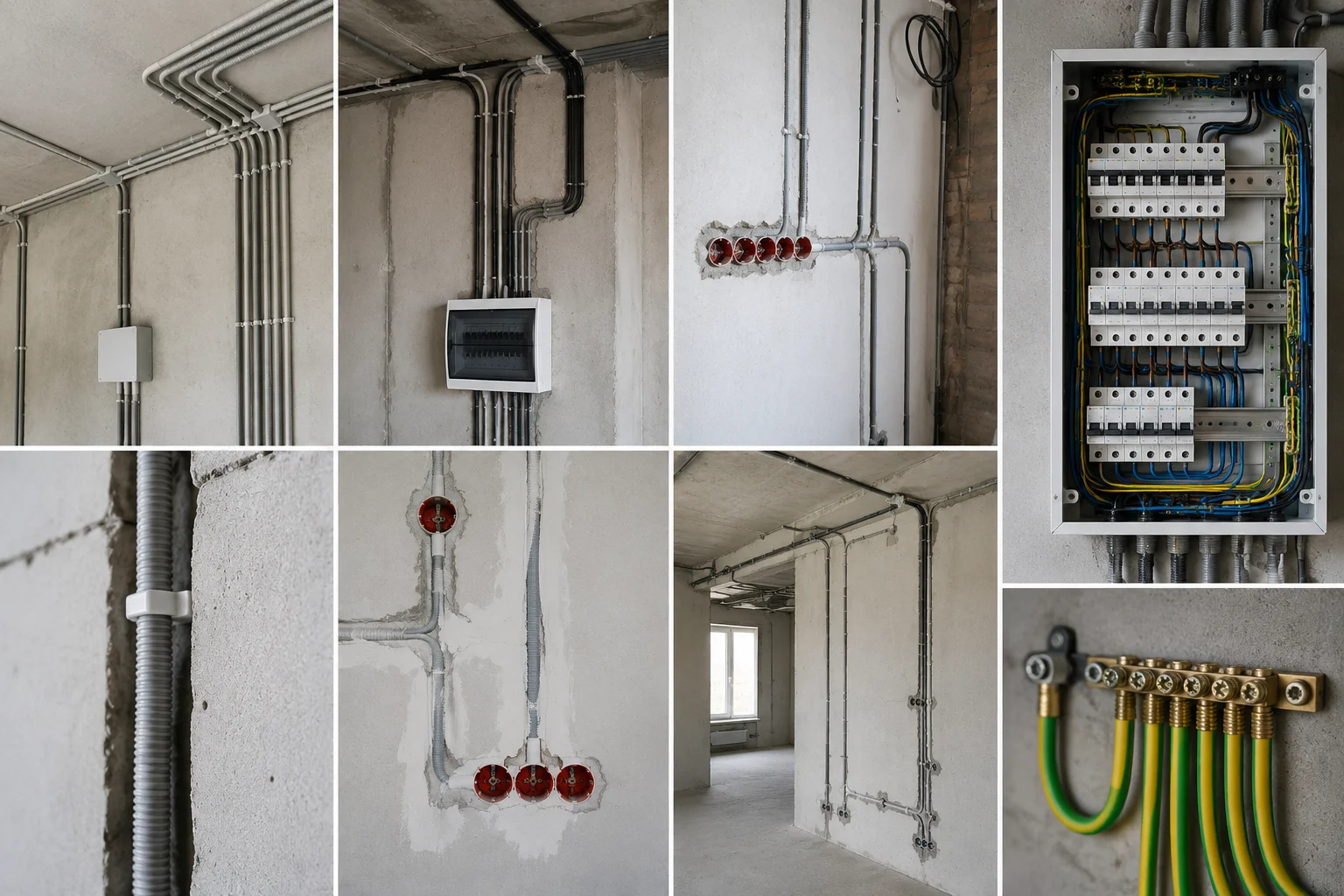
Electrical wiring is one of the most important stages of any renovation. Properly installed electrical systems improve safety, reduce the risk of fire, and make future appliance installation and system maintenance easier. All work should be carried out according to a pre-planned design and applicable construction standards.
1.1 Main Electrical Installation Standards
- All cables should be installed inside protective conduits.
- Cables should run only horizontally or vertically.
- Power and internet cables should not be installed in the same conduit.
- High-power appliances such as ovens, air conditioners, and water heaters should have separate circuits.
- Each electrical group should have its own circuit breaker.
- A proper grounding system is essential.
- RCD protection is recommended for bathrooms and other wet areas.
- Junction boxes should remain accessible.
- The number and location of sockets and switches should be planned in advance.
- The entire electrical system should be fully tested before the walls are closed.
1.2 What Are the Most Common Mistakes?
- Installing cables without protective conduits.
- Creating diagonal cable routes.
- Connecting too many points to a single circuit breaker.
- Ignoring the grounding system.
- Installing too few sockets and switches.
1.3 Datvale.ge Recommendation
Before starting electrical work, use the Renovation Calculator to estimate the scope of work and budget in advance. If you are planning to update the lighting during renovation, explore the lighting products available from New Light, which offers modern lighting solutions for residential and commercial spaces.
2. Plumbing & Heating Standards
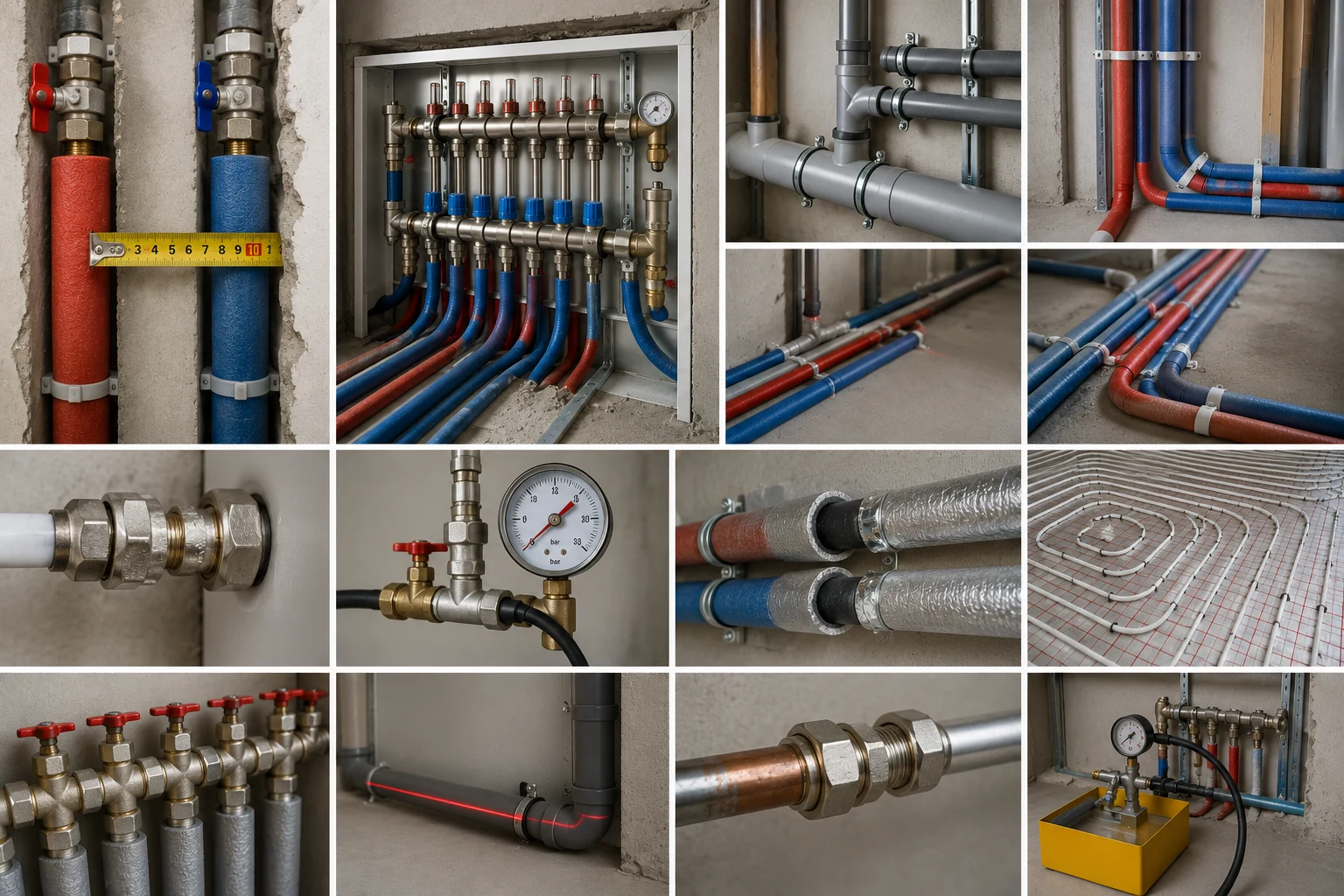
High-quality installation of plumbing and heating systems plays a major role in the comfort, safety, and long-term performance of a residential space. Incorrectly installed pipes, improper slopes, or low-quality connections can often lead to water leaks, inefficient heating, and additional expenses. For this reason, all work should be carried out in accordance with applicable construction standards.
2.1 Main Plumbing & Heating Standards
- Cold and hot water pipes should be separated by at least 5 centimeters.
- All water pipes should be properly insulated.
- Pipes should not cross over one another.
- Connections should be made only with high-quality fittings.
- Drainage pipes should have the correct slope to ensure proper water flow.
- The system must be pressure-tested before the walls are closed.
- All shut-off valves should remain easily accessible.
- A manifold system is recommended for independent control.
- Underfloor heating pipes should be installed at even spacing.
- After completion of the work, the entire system should be fully tested.
2.2 Most Common Mistakes
- Installing pipes without insulation.
- Placing hot and cold water pipes too close to each other.
- Incorrect drainage slope.
- Using low-quality fittings.
- Skipping pressure testing.
2.3 Datvale.ge Recommendation
Before starting plumbing and heating work, use the Plumbing & Heating Calculator to estimate material quantities and your budget in advance. If you are planning a bathroom renovation, use the Bathroom Calculator. For bathroom fixtures and accessories, explore products from Vitra.
3. Ceramic Tile Installation Standards

Proper ceramic tile installation affects not only the visual quality of the interior, but also its durability. Poor surface preparation, low-quality tile adhesive, or uneven installation can lead to loose tiles, cracks, and moisture problems. For this reason, ceramic tile installation should be carried out according to professional standards.
3.1 Main Ceramic Tile Installation Standards
- Walls and floors should be properly leveled before installation begins.
- High-quality tile adhesive should be used.
- Waterproofing should be completed in wet areas before tile installation.
- Spacing between tiles should be consistent by using clips and spacers.
- Corners should be properly aligned and symmetrical.
- Cut tiles should be placed in less visible areas.
- Tile surfaces should be level, without height differences between adjacent tiles.
- Grouting should only be carried out after the adhesive has fully cured.
- Wall-to-floor joints should be sealed with silicone.
- After the work is completed, the surface should be thoroughly cleaned of adhesive and grout residue.
3.2 Most Common Mistakes
- Skipping waterproofing.
- Uneven spacing between tiles.
- Using low-quality tile adhesive.
- Height differences between tiles.
- Grouting too early.
3.3 Datvale.ge Recommendation
Before starting ceramic tile work in a bathroom, kitchen, or other space, use the Bathroom Calculator to estimate the required quantities of tiles, adhesive, grout, and other materials in advance. For high-quality ceramic tiles, you can explore products from Kerama Marazzi and Merlons.
4. Laminate Flooring Installation Standards
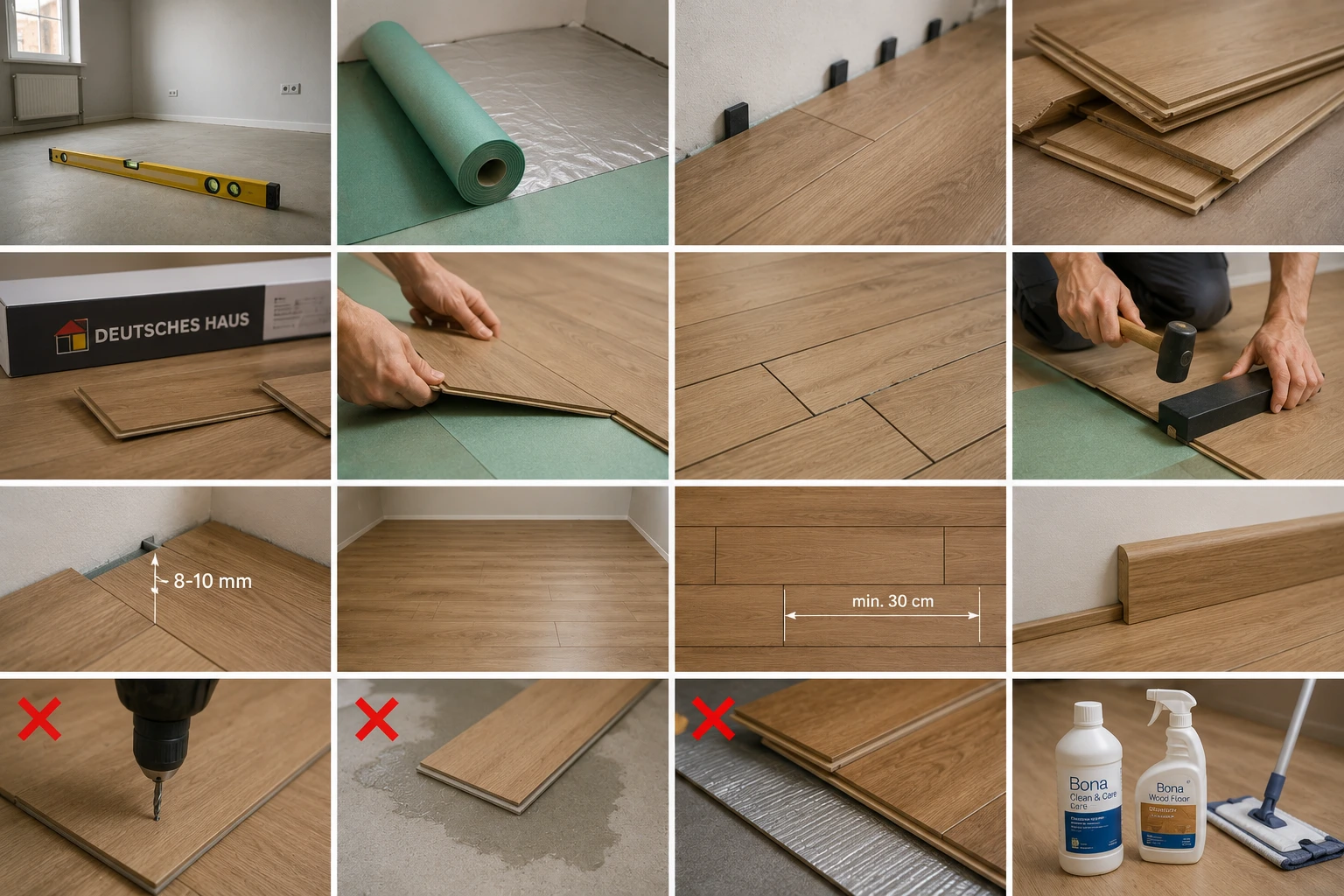
Proper laminate flooring installation helps ensure durability, comfort, and long-term performance. An uneven subfloor, low-quality underlay, or failure to leave expansion gaps can cause the laminate to swell, separate, or become damaged. For this reason, installation should be carried out according to professional standards.
4.1 Main Laminate Flooring Installation Standards
- Before installation, the floor should be perfectly level and dry.
- A high-quality underlay should be used.
- An 8–10 mm expansion gap should be left along the walls.
- Before installation, the laminate should remain in the same room for at least 48 hours to acclimate.
- Installation should begin from a straight line and the rows should be evenly aligned.
- End joints between neighboring rows should be staggered by at least 30 cm.
- Laminate flooring should not be fixed to the floor with screws or nails.
- Moisture-resistant laminate should be used in areas exposed to moisture.
- Skirting boards should be attached only to the wall and not to the laminate flooring.
- After installation, the floor should be cleaned using appropriate floor care products.
4.2 Most Common Mistakes
- Failing to leave an expansion gap.
- Installing laminate on an uneven floor.
- Using low-quality underlay.
- Installing laminate on a damp surface.
- Fixing the laminate directly to the floor.
4.3 Datvale.ge Recommendation
Before installing laminate flooring, check the level and moisture condition of the subfloor. For selecting quality laminate and accessories, explore products from Deutsches Haus. For the care of laminate, parquet, and wooden floors, use professional products from Bona.
5. Wall Plastering and Painting Standards
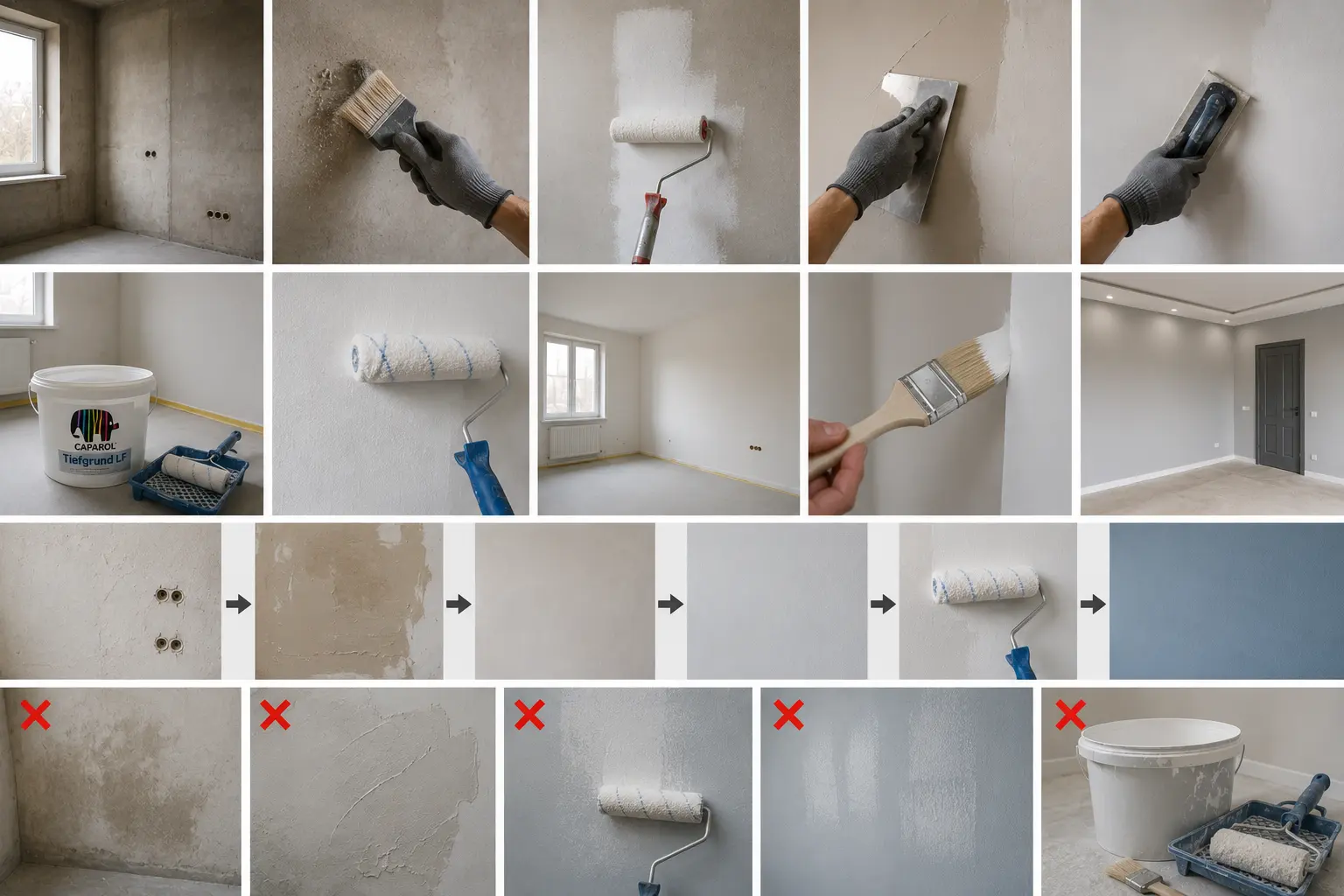
Wall plastering and painting are among the most visible stages of interior renovation. Poor-quality work can result in waves, cracks, stains, and uneven surfaces. To achieve a high-quality finish, it is essential to prepare the surface properly, use quality materials, and follow the correct technology at every stage.
5.1 Main Wall Plastering and Painting Standards
- The wall should be completely cleaned of dust and debris.
- Primer should be applied before painting.
- The wall should be perfectly leveled and properly skim-coated.
- Before painting, the surface should be sanded to achieve a smooth and uniform finish.
- Paint should be applied in at least two coats.
- The manufacturer’s recommended drying time should be observed between coats.
- Painting should be carried out under appropriate temperature and humidity conditions.
- High-quality rollers and brushes should be used.
- Corners and joints should be straight and clean.
- After completion, the surface should be free of stains, streaks, and color differences.
5.2 Most Common Mistakes
- Skipping primer application.
- Painting on a damp wall.
- Unevenly skim-coated surfaces.
- Applying only one coat of paint.
- Using low-quality paint.
5.3 Datvale.ge Recommendation
Before starting painting work, use the Renovation Calculator to estimate the required quantity of paint and other materials. For high-quality paints and facade systems, explore products from Caparol. For a wide selection of construction materials, visit NOVA.
6. Ceiling Installation Standards
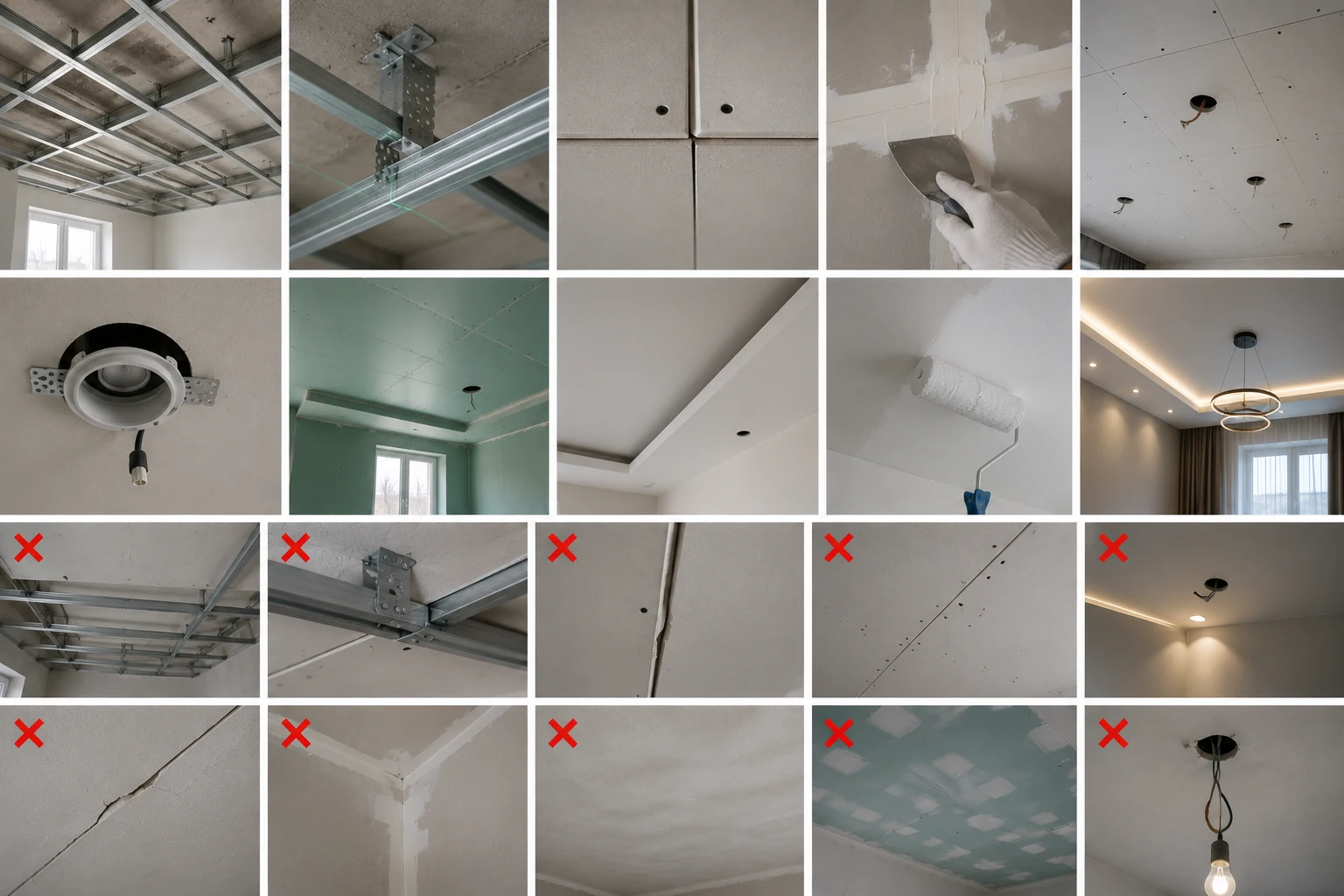
Ceiling installation has a significant impact not only on the visual appearance of the interior, but also on lighting, acoustics, and overall comfort. Drywall, stretch ceilings, and other ceiling systems should be installed in full accordance with the required technology to prevent cracks, deformation, and uneven surfaces.
6.1 Main Ceiling Installation Standards
- The frame should be installed on a perfectly level plane.
- All profiles should be securely fixed with appropriate fasteners.
- A proper technical gap should be left between drywall sheets.
- Joints should be finished using special tape and joint compound.
- Lighting points should be planned in advance.
- The ceiling structure should be able to support the weight of lighting fixtures and other elements.
- Moisture-resistant drywall should be used in damp areas.
- Before painting, the surface should be fully leveled and primed.
- The finished ceiling should be free of cracks, waves, and visible joint marks.
- After completion, the lighting and all built-in elements should be tested.
6.2 Most Common Mistakes
- Incorrectly installed framing.
- Using low-quality profiles.
- Failing to properly finish drywall joints.
- Poor planning of lighting points.
- Painting without primer.
6.3 Datvale.ge Recommendation
Before starting ceiling work, use the Renovation Calculator to estimate material and labor costs in advance. To choose modern lighting fixtures and lighting systems, visit New Light, where you can find various types of ceiling lighting.
7. Furniture Manufacturing Standards
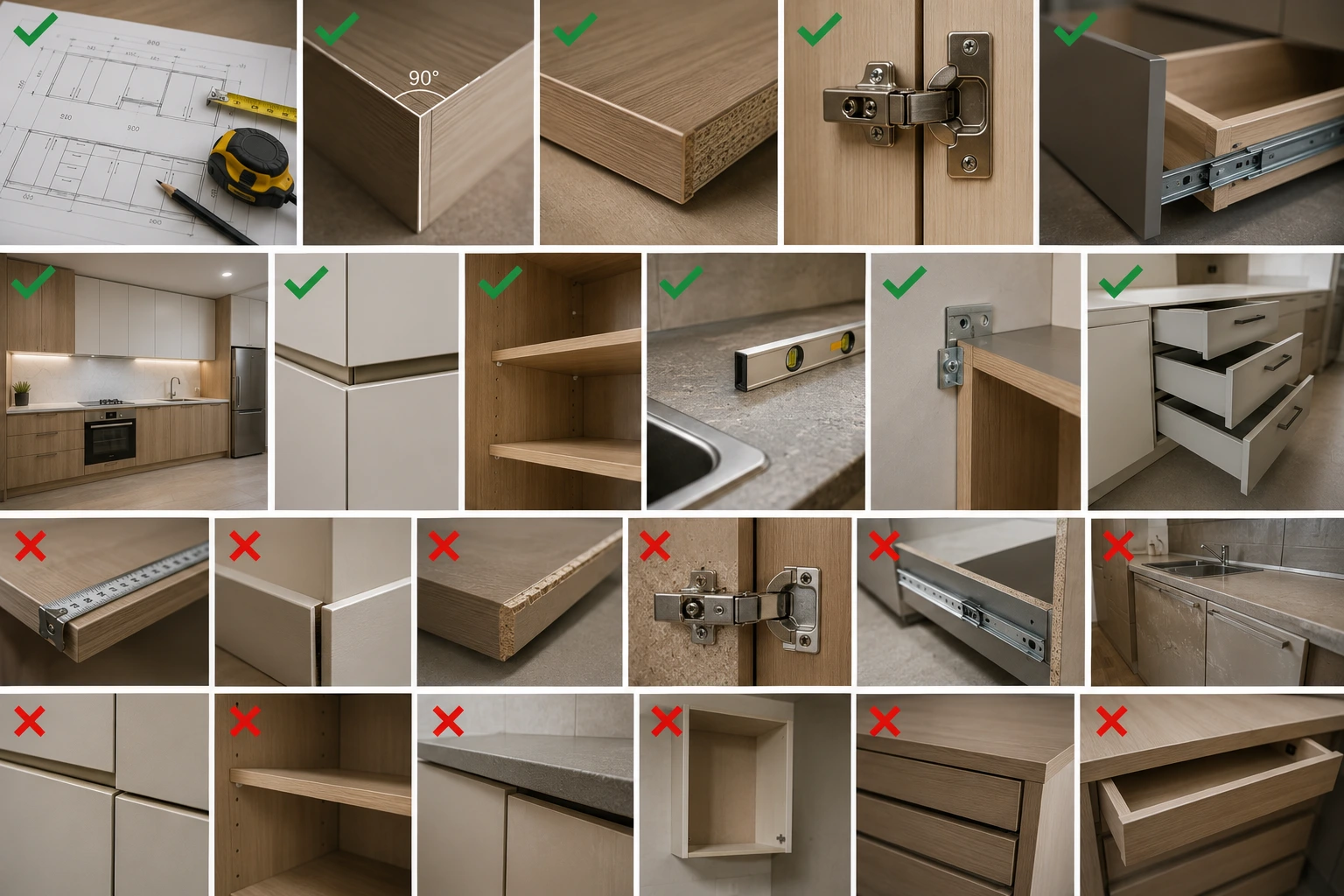
When producing custom-made furniture, it is important to consider not only the design, but also the quality of materials, proper construction, accurate measurements, and the use of high-quality hardware. Following professional standards helps ensure long-term durability, safety, and everyday comfort.
7.1 Main Furniture Manufacturing Standards
- All measurements should be checked at least twice before production begins.
- The cabinet structure should be assembled with precise 90° angles.
- All exposed edges of laminated boards should be properly edge-banded.
- High-quality hinges, drawer runners, and other mechanisms should be used.
- Moisture-resistant materials and accessories should be used in kitchen cabinets.
- Gaps between cabinet and kitchen fronts should be even.
- Shelves should be properly positioned and designed for the expected load.
- Kitchen worktops should be perfectly level.
- Installed furniture should be securely fixed to the wall where required.
- Before handover, all doors, drawers, and mechanisms should be checked for proper operation.
7.2 Most Common Mistakes
- Incorrect measurements.
- Using low-quality hardware.
- Leaving exposed edges unfinished.
- Uneven spacing between doors and drawers.
- Insufficiently securing furniture to the wall.
7.3 Datvale.ge Recommendation
Before ordering furniture, use the Furniture Calculator to estimate material quantities and expected costs in advance. For interior visualization, use the Design Calculator. For high-quality furniture and furniture lighting solutions, explore products from New Light Furniture.