


- EN
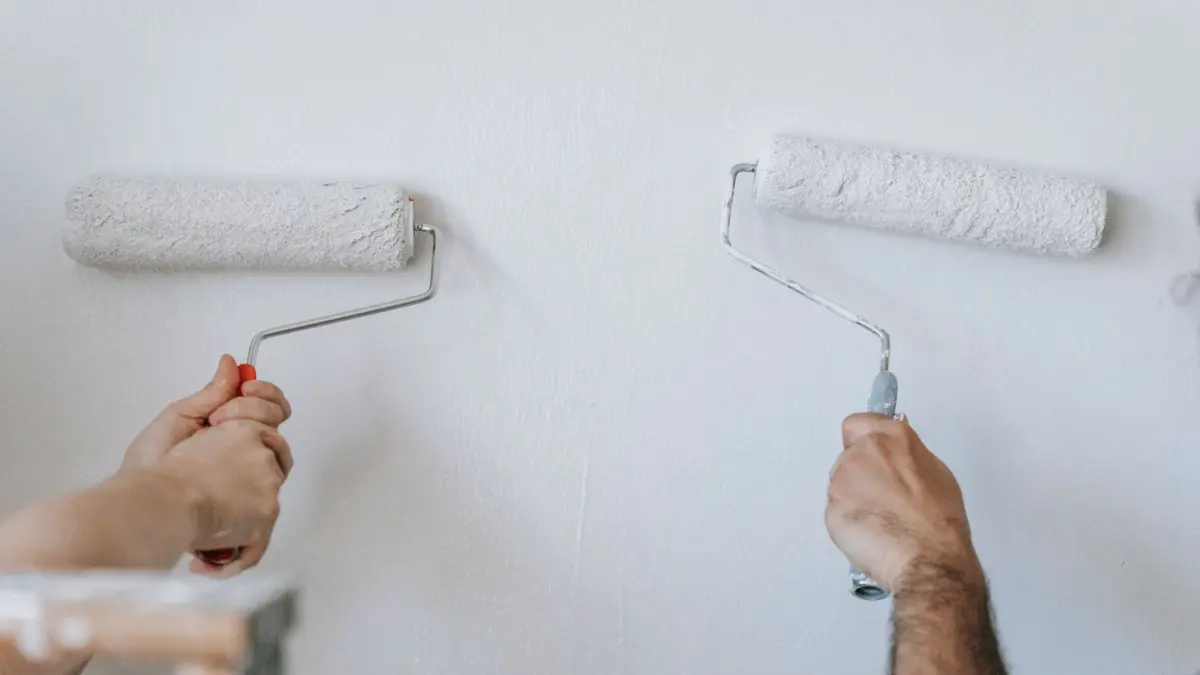

Cheap renovation materials are not about picking the lowest price tag. They are about buying the same quality for less, and that takes a plan. Almost everyone starting a renovation asks the same question: how do I find cheap renovation materials without buying something that falls apart in two years? It is a natural fear. Many people have heard the story of a saved hundred lari that later cost thousands. On the other hand, materials are one of the biggest lines in a renovation budget, so this is exactly where the difference between smart and pointless spending shows most clearly.
In this article we show how to find cheap renovation materials without hurting quality: where saving makes sense and where it does not, how to compare prices, when to buy, and which mistakes to avoid. If you first want the big picture, use the renovation calculator and work out the cost by type of work and material.
These five rules are explained in detail below so that buying cheap renovation materials becomes easy for you. For the overall picture, read our article on a 20,000 lari renovation budget for a 60 m² apartment, where we showed where every lari goes.
That is why the main measure is not the price per square metre. The main measure is the full cost over the whole service life. If a tile is 20% cheaper but has to be replaced in five years, it actually costs you twice as much. Conversely, if you pay 30% of an expensive brand’s price just for the name and get technically the same product, that is a pointless payment.
The cheapest material is the one you do not buy at all. In renovation, over-buying is one of the most common losses: two extra bags of adhesive, an extra box of tiles, two buckets of paint you will no longer need. Each one is small, but together they make up a noticeable part of the budget.The rule is simple: for every material, calculate the area or volume, add a technological reserve (usually 5-10% for tiles and laminate, more for diagonal laying) and nothing else. That is the first step toward buying cheap renovation materials. The laminate calculator does this counting in seconds, and the renovation calculator shows the cost for the whole apartment.
It also helps to know the order of works. If you buy materials too early, they will take up space for months, get damaged, or you will forget what you have. If you buy too late, an idle crew will cost you extra money. On this topic, see the 8 stages of renovation and their timing.
In a shop, two buckets of paint can cost the same, yet one holds 9 litres and the other 7.5. Two bags of adhesive sell at the same price, but one is 20 kg and the other 25. So to find cheap renovation materials, always convert the price to a unit: lari per litre, lari per kilogram, lari per square metre.Another important indicator is the consumption rate. A paint that is cheaper per litre but covers poorly needs an extra coat and ends up more expensive. The same goes for adhesive and plaster: look at the consumption per square metre stated on the package and compare not the price of the bag, but the price per area covered.
MaterialWhat to compareWhat is often forgottenPaintPrice per litre and coverage in m²/lNumber of coatsTile adhesivePrice per kg and consumption in kg/m²Tile size and substratePlaster, puttyPrice per kg and layer thicknessWall unevennessLaminatePrice per m² and classUnderlay and skirting boardsTilePrice per m² and edge typeOffcuts and defects
This table looks trivial at first glance, but real savings start exactly here. When you compare the same indicators in a second shop, you spot “cheap” offers that are not really cheap right away, and you choose cheap renovation materials with more confidence.## 3. Cheap renovation materials: where you can save and where you cannot
The most important rule is this: save on what you can easily replace, and do not save on what hides under a wall or a floor. If you make a mistake in a hidden system, fixing it means demolition, new materials and a repeat renovation.
One shop’s price is never the market price. The same adhesive or tile can have a noticeably different price at different sellers, because their stock, delivery costs and margins differ. So when you look for cheap renovation materials, comparing three suppliers is the minimum standard.
In practice, act like this: make one list with the same item names and quantities, request a price from each seller and record everything in one table. Compare not only the price of the material, but also delivery, payment terms and the possibility of returns. Often a price that is 3-5% cheaper disappears into more expensive delivery.On large orders a shop will often offer a discount by itself if you ask directly. This works especially well when you buy several kinds of material from one seller at once. We have collected discounts and partner offers in one place on the Datvale partners page, where you may find a good deal on exactly the material you need.
Give the seller an exact list: name, manufacturer, size, quantity and delivery address. If you write inaccurately, one seller will offer a cheap analogue and another the original, and the comparison becomes meaningless. Ask to receive the offer in writing and ask them to state how long the price is valid.
A brand often accounts for half of the price, but that does not mean you should always choose an unknown one. The sensible way is to ignore the brand and look at the technical characteristics: durability class, moisture resistance, coverage, the applicable standard and the warranty. If two products have the same parameters, the cheaper one is often enough.As general reference works put it, building materials are divided by their purpose and properties, and it is these properties that matter, not the label. You can read the Wikipedia overview of building materials to better understand the main categories.
CharacteristicWhat it meansWhy it is worth checkingAbrasion resistanceHow well it withstands frictionAffects the life of the floorMoisture resistanceReaction to waterCritical in the bathroom and kitchenCoverageHow many coats it needsDirectly changes the real costWarrantyThe manufacturer’s commitmentProtects you against defectsOne batchThe same tone and sizeAvoids seams and shade differencesIf these terms are new to you, do not worry. A shop assistant or a tradesman will explain them easily, but still look at the product’s technical sheet once. Those five minutes of reading protect you from the most common mistake.
Timing sometimes affects the price even more than the choice of shop. In the building season demand rises and so do prices, while in winter the terms are often more flexible. If the renovation starts on a planned date, you can buy part of the materials in advance and at a discount.
To buy cheap renovation materials, use the following approach:
The cost of materials is only one part of the total renovation budget, so a savings plan must be made against the full picture. According to our article, 20,000 lari for a 60 m² apartment, or about 330 ₾ per square metre, is enough for an economy renovation from a white shell, but for a full renovation from a black shell it is already too little. For exact figures, see the article on a 20,000 lari budget for 60 m².
The formula is simple:
Material cost = quantity × price per unit × (1 + reserve)
Total cost = materials + labour + delivery + extra costs
Savings = the difference between offers that are technically identicalPeople most often forget the second line. Delivery, lifting costs, waste removal and unexpected cases take up a noticeable part of the budget. So even when you buy cheap renovation materials, always keep a 10-15% reserve and write it as a separate line, not inside the material cost. If you do not need the reserve, you simply get a pleasant bonus.
When you save too much on materials, the tradesman often spends more time, because bad adhesive, an uncorrected wall or a non-standard size takes longer. As a result labour grows and the money saved on materials is lost. In short, if you want cheap renovation materials, look at the whole picture first. Learn more about tradesman pricing tricks so that you compare the total cost and not individual lines.
Theory is good, but practical scenarios explain better how the cheap renovation materials approach works. Below are three typical cases. We deliberately do not give numbers, because prices change; the logic is what matters.
In an old apartment the main risk is hidden defects: old pipes, unreliable wiring, dampness. Here it helps to inspect the flat before buying materials and to make a replacement list. Plan the hidden things first, then the rest. This is where the most overspending happens if there is no reserve in the budget.
On a small renovation the biggest saving is in counting the quantity correctly. Sellers often give you a whole package, which turns out to be too much. For one room it is often better to buy in a pack size that minimises leftovers, even if it is slightly more expensive per unit.
With paint, the most important things are coverage and the number of coats. If a cheap paint needs three coats instead of two, there is no saving any more. So check the technical sheet before buying and, if possible, try a small size first. With plaster and putty, the saving more often lies in preparing the wall: the better the base is levelled, the less material you will need.
Saving on tile is the most common, but it must be done with great care. Do not compare the price of a single tile on its own: the defect rate, the accuracy of the edge and one batch are already part of the price. The adhesive must match the tile size and the substrate, otherwise the saving will end with a tile falling off. To buy cheap renovation materials, check the adhesive class first and only then the tile price.
There is very little room for saving here. A good fitting and the right cable are a relatively small sum against the whole budget, but correcting a wrong choice is expensive and painful. For more on wiring details, read the article on electrical wiring.
For any material ask yourself three questions: will it be easy to replace? Does it affect safety? Is it visible every day? If the answer is “yes, no, no”, this is exactly where to look for cheap renovation materials. If the answer is “no, yes, no”, give priority to quality, even if the price is higher.
Finally, do not forget that searching for cheap materials has a cost too: time and energy. If you spend two weeks visiting dozens of shops to save 2%, it is not worth it. So set your own threshold: for which items a big search pays off (tile, floor, plumbing) and for which a quick comparison is enough (adhesive, screws, small items). That way finding cheap renovation materials becomes effective and not exhausting.
Cheap materials are often blamed unfairly, and expensive ones praised unfairly. In reality the problem is not the price but the wrong choice or the wrong use. Below are the mistakes that repeat most often when people look for cheap renovation materials.
For convenience many people buy everything in one place. That saves time, but not money. Especially for large items (tile, floor, plumbing), comparing two or three shops almost always pays off.
Cheap paint on a kitchen ceiling is fine, but the same paint in a bathroom spoils quickly. Cheap adhesive may be enough for small tiles, but not for large format. Always check the intended use.
Many tradesmen know exactly which material makes the work harder and which makes it easier. Before buying, ask which brand or type they prefer, since they are responsible for the final result.
Check the material as soon as it is delivered: the integrity of the box, the edges, colour differences, the expiry date. After installation a defect stays your loss, because the seller will no longer admit it.### Mistake 6: not reading the contract details
A written contract, a receipt and a warranty protect you in a dispute. If the seller gives you verbal promises, demand that they put them in writing at once.
A material that is stored properly does not spoil, and a spoiled material means a double cost. The table below helps you avoid losing the money you saved.
MaterialHow to store itWhat threatens itCement, adhesive, plasterDry, raised off the floorHardening and becoming unusablePaintClosed, away from frostCurdling and colour changeLaminate, parquetHorizontally, at room temperatureDeformationTileIn original boxes, one batchDifferences in tonePipes, cablesAway from the ground, protected from sunDamage and deformationThese rules do not make buying cheap renovation materials harder, on the contrary, they protect the money you saved. The rules are simple, but they are the ones most often ignored. Buying material from one batch is especially important: tile or paint from a second batch can be a slightly different tone, which is noticeable in the finished renovation.
If you are thinking about how to make a renovation last, read about the stages of parquet restoration: proper care of materials often delays the need for a new renovation by years.
To sum up, here is the sequence of actions you can use easily:
Before you set out shopping, run your eye over this short list so that the search for cheap renovation materials is more focused. First write down what you need and in what quantity. Then set a budget limit for each item, so that you do not buy on emotion on the spot. Keep a price table on your phone and fill in the same fields in every shop. Ask about discounts, especially for a large order, and record the delivery price too.
Before leaving the shop, make sure you have the receipt, the name of the material and the manufacturer’s details. If something does not match, returning it is much easier on the same day than a month later. These small details together make the difference between a person who overshot the renovation budget and one who stayed within the planned sum. Remember that cheap renovation materials are bought not in a hurry, but with preparation.
If you want to go deeper into the characteristics of colours and paints, see the Wikipedia overview of paint.
Compare at least three suppliers, convert the price to a unit (lari per m², per litre, per kg) and check the technical characteristics. Do not save on quality for hidden systems: waterproofing, pipes and wiring.
For tile and laminate, 5-10% is usually enough, and more for complex geometry or diagonal laying. In the overall budget, leave a 10-15% reserve as a separate line.
Not always. If the coverage and the class fit your purpose, cheap paint is suitable for surface rooms. However, in a wet area or a place that is cleaned often, give priority to moisture-resistant paint.
Mostly during promotions, volume discounts and outside the season. The main thing is that when you buy in advance, you store the material correctly and check the expiry dates.
Surface and easily replaceable materials (decor, lights, the top coat) are a safe zone for saving. Hidden and critical parts (insulation, waterproofing, wiring, pipes) must be of good quality.## Calculate and save with Datvale: cheap renovation materials and an exact budget
Do you want to know exactly how much your renovation will cost and where you can save? Use our free renovation calculator and get the cost in minutes. To see discounts and reliable suppliers, visit the partners page.