


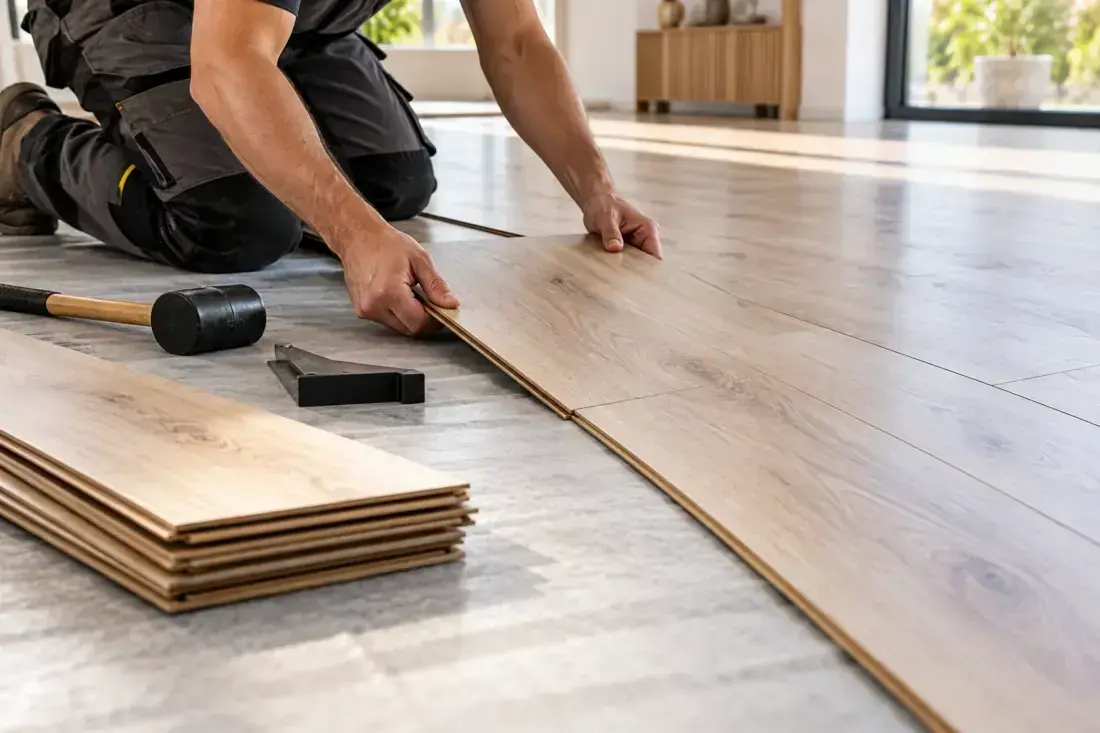

Choosing laminate flooring should not be based only on color and design. To select the right laminate, it is important to consider the purpose of the room, expected foot traffic, flooring class, thickness, moisture resistance, and installation conditions.
Understanding how to choose laminate flooring makes it easier to select a product that suits a particular room and performs well under everyday use.
How to Choose Laminate Flooring
There is no single answer to the question of how to choose laminate flooring. Bedrooms, living rooms, hallways, and commercial spaces have different flooring requirements.
When selecting laminate flooring, consider several important factors:
- Laminate flooring class;
- Laminate thickness;
- Expected room traffic;
- Moisture resistance;
- Surface quality;
- Installation and locking system;
- Suitable underlayment;
- Color and compatibility with the interior.
What Do Laminate Flooring Classes Mean?
Laminate flooring classes are among the main specifications buyers encounter when comparing products. These classifications help indicate the type and intensity of use for which a particular laminate is designed.
Classes 31, 32, and 33 are commonly available for residential flooring. Generally, higher classes are designed to withstand more intensive use.
Class 31 Laminate Flooring
Class 31 laminate can be suitable for rooms with relatively low foot traffic, such as bedrooms or spaces that are used less frequently.
Class 32 Laminate Flooring
Class 32 laminate is a common choice for residential interiors. It can be suitable for living rooms, bedrooms, and other spaces used on a daily basis.
Class 33 Laminate Flooring
Class 33 laminate is intended for higher levels of traffic and is often chosen for areas where flooring is used more intensively.
How Important Is Laminate Flooring Thickness?
Laminate flooring thickness is another important specification. Different thicknesses are available, including 7 mm, 8 mm, 10 mm, and 12 mm options.
Thicker laminate does not automatically mean better flooring in every situation. However, thickness can influence floor stability, the feeling underfoot, and, in some cases, noise performance.
The final decision should take into account the flooring class, product quality, condition of the subfloor, and the requirements of the particular room.
Which Laminate Flooring Is Best for a Bedroom?
When considering the best laminate flooring for a bedroom, remember that floor traffic in this space is usually lower than in a hallway or living room.
A good-quality, mid-range laminate may therefore be sufficient. Appearance, comfort underfoot, and underlayment quality are also important considerations.
Which Laminate Flooring Is Best for a Living Room?
Living rooms are generally used more frequently, so choosing laminate flooring for this area should take higher traffic into account.
Surface durability, a reliable locking system, and a properly prepared subfloor are particularly important.
Choosing Laminate Flooring for a Hallway
Hallways are among the busiest areas in a home. Dirt, fine sand, and dust brought in on shoes, together with frequent foot traffic, can increase surface wear.
For this reason, choosing laminate flooring with greater resistance to intensive daily use is recommended.
Laminate Flooring and Moisture Resistance
Water is one of the main risks associated with laminate flooring. Moisture resistance varies between products, so checking technical specifications is particularly important when selecting laminate for kitchens, hallways, or other areas where moisture may be present.
Water-resistant and waterproof do not always mean the same thing. Always review the manufacturer's specifications and installation instructions for the particular product.
Why Is the Right Laminate Underlayment Important?
Along with selecting quality laminate flooring, it is important to choose suitable underlayment. Underlayment is installed between the laminate boards and the subfloor.
It can help accommodate minor surface irregularities and reduce footstep noise, depending on the product and installation system.
The type and thickness of the underlayment should be compatible with both the laminate flooring and the underlying surface.
How Much Laminate Flooring Should You Buy?
When purchasing laminate flooring, buying only the exact floor area is not always sufficient. Cutting, room shape, and installation direction can create material waste, so an additional allowance is usually necessary.
Straight installation patterns generally produce less waste, while diagonal layouts and rooms with complex shapes may require additional material.
Calculate Your Laminate Flooring Costs in Advance
Enter your floor area, laminate type, and other relevant details to estimate material and installation costs.
Open Laminate Flooring Calculator →Straight or Diagonal Laminate Installation?
The direction in which laminate flooring is installed affects both the final appearance and the quantity of material required.
Straight installation is a simpler and more common option. Diagonal installation can create a different visual effect, but it often involves more cutting and therefore greater material waste.
Preparing the Subfloor Before Laminate Installation
Even expensive laminate flooring may not perform correctly if the subfloor has not been properly prepared.
The surface should be sufficiently level, stable, clean, and suitable for the selected installation system.
Significant unevenness can create additional stress on the board connections and cause unwanted movement over time.
Which Laminate Flooring Is Best?
The answer depends on where the flooring will be installed.
One type of laminate may be completely suitable for a bedroom, while a hallway or frequently used living room may benefit from a more durable flooring class.
Therefore, buying the highest flooring class or the thickest available laminate is not automatically the best decision.
The right approach is to select a product whose technical characteristics match the conditions of the room.
How to Choose Laminate Flooring Colors
After considering technical specifications, appearance is also important.
Lighter shades can make a room appear brighter and more spacious, while darker tones often create stronger contrast within an interior.
When choosing a color, compare it with doors, walls, furniture, and the overall lighting of the room.
How to Maintain Laminate Flooring
Proper maintenance is important for preserving laminate flooring over the long term.
Avoid leaving large amounts of water on the surface and use cleaning products intended for the specific type of flooring.
To explore flooring maintenance and related cost planning, visit Datvale's Flooring Calculators .
Laminate Flooring vs. Parquet Flooring
When comparing laminate and parquet flooring, important factors include your budget, preferred appearance, the desire for natural materials, and the possibility of restoring the floor in the future.
If you are interested in traditional natural wooden flooring, you can estimate installation expenses using Datvale's Parquet Flooring Calculator .
Laminate Flooring vs. Three-Layer Engineered Parquet
Another possible alternative is three-layer engineered parquet. It is a wooden flooring product with a different construction from laminate flooring.
When comparing these options, consider the price, material structure, and the desired final appearance.
For flooring cost planning, explore Datvale's Flooring Calculators .
Common Mistakes When Choosing Laminate Flooring
One of the most common mistakes when choosing laminate flooring is focusing only on appearance.
- Ignoring the expected foot traffic in the room;
- Choosing laminate based only on thickness;
- Overlooking laminate flooring classes;
- Selecting unsuitable underlayment;
- Purchasing insufficient extra material;
- Installing laminate over an uneven subfloor;
- Failing to consider moisture conditions.
Laminate Flooring Prices and Budget Planning
After selecting the right product, it is important to estimate the overall budget.
Laminate flooring prices vary according to the product characteristics, thickness, class, and manufacturer.
The total installation cost may also include underlayment, installation labor, skirting boards, and additional materials.
To estimate laminate flooring prices and installation expenses, use the Laminate Flooring Cost Calculator on Datvale.ge. Enter your floor area and relevant specifications to receive an estimated cost breakdown.
Conclusion: How to Choose the Right Laminate Flooring
Choosing laminate flooring requires more than selecting an attractive color or texture.
Understanding how to choose laminate flooring means considering flooring class, thickness, moisture resistance, installation requirements, and daily use.
Comparing laminate flooring classes helps you select a product suitable for the expected traffic, while checking laminate flooring prices allows you to plan the overall project budget.
By combining the right technical specifications with proper installation and regular maintenance, you can choose flooring that suits both your interior and everyday needs.