


- EN
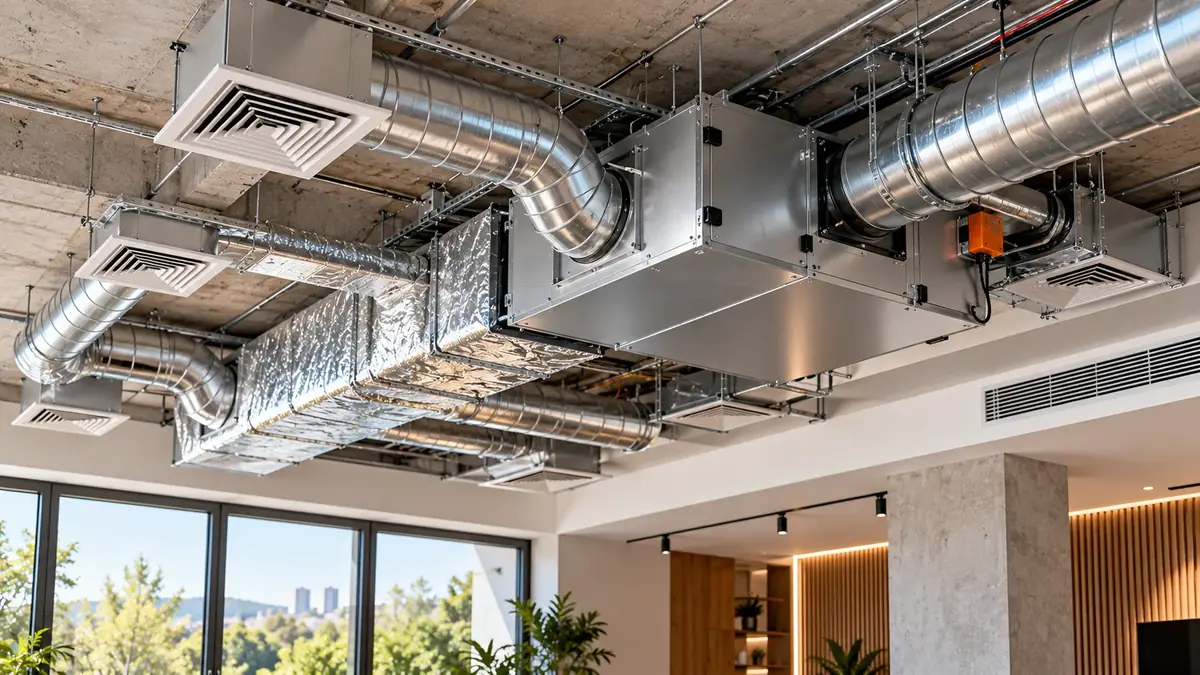

Heat recovery ventilation constantly supplies fresh air to your apartment without opening windows, while recovering 70–90% of the heat from the outgoing air and transferring it to the incoming air. In winter rooms don’t cool down, in summer they don’t overheat, and the air is always fresh. This guide explains how heat recovery ventilation works, who needs it, the types, planning, maintenance and how much it saves on heating.
📌 To estimate ventilation costs, use the ventilation calculator.
An HRV unit passes two air streams side by side: warm stale air leaving the rooms and cold fresh air coming from outside. They never mix, but in the heat exchanger the outgoing air transfers its heat to the incoming air. If it’s 0°C outside and 22°C inside, fresh air enters already warmed to 16–19°C.
| Type | How it works | Best for |
|---|---|---|
| Central (ducted) | One unit in the ceiling, ducts to every room | New apartment, house, during renovation |
| Decentralised (wall) | Compact device in the wall, one per room | Existing apartment without ducts |
| Paired reversible | Two devices alternately supply and extract | 2–3 room apartment, budget option |
Ventilating by opening windows in winter loses 25–40% of heating. Heat recovery ventilation cuts this loss by 70–90%, which in a well-insulated apartment means 15–25% lower heating costs. Calculate your heating cost with the central heating calculator.
Filters are replaced every 3–6 months, the heat exchanger is washed once a year and ducts are cleaned every 3–5 years.
In a 90 m² apartment condensation formed on windows every winter morning and mould appeared in the bathroom. After installing central heat recovery ventilation during renovation, condensation disappeared, mould never returned, and gas consumption fell by about 18%.
The price depends on the type, area, duct length and brand. Get an estimate with the ventilation calculator and buy equipment at a discount from our partner Cold Metal. Learn more: Heat recovery ventilation.
📹 Video tips: Datvale YouTube · 👍 News and discounts: Datvale Facebook
Modern units use 30–100 W, about as much as a light bulb, and the heating savings far exceed this.
A properly installed system with silencers is almost silent in night mode (20–25 dB).
Yes, decentralised wall units need no ducts or major renovation.
Yes. Constant air exchange keeps humidity at 40–60% and prevents condensation and mould.