


- EN
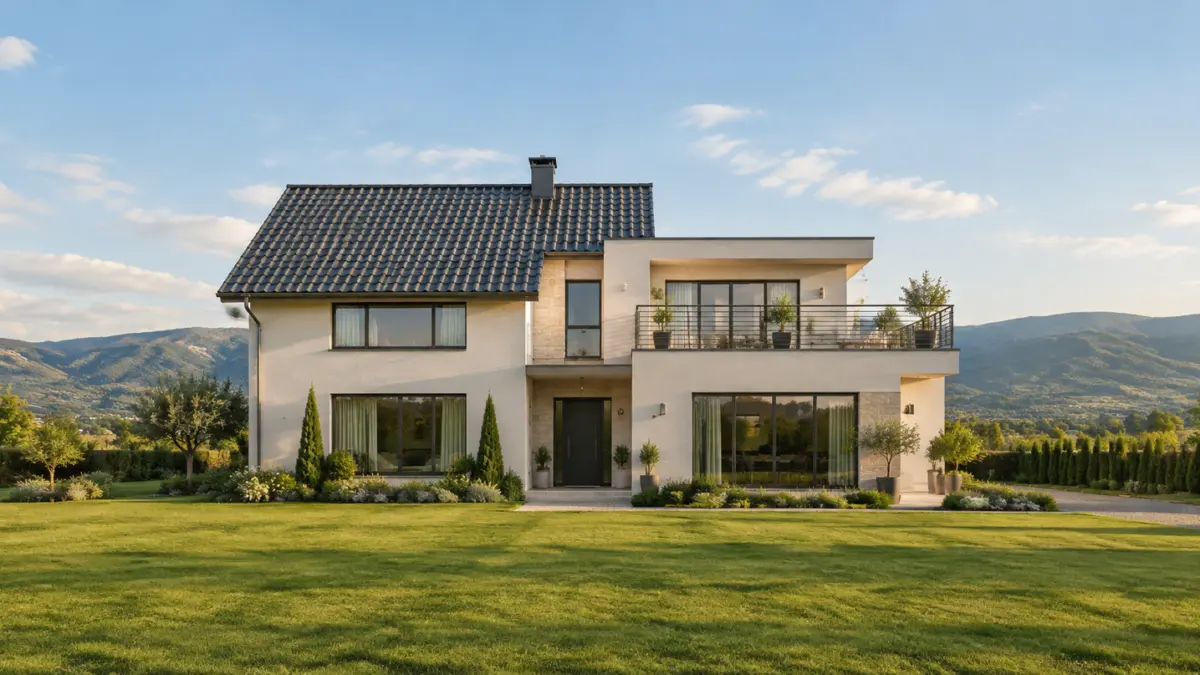

Monolith or metal roof: everyone who builds a house asks this question. Roofing is one of the most expensive and important stages of construction. A well-chosen roof lasts for decades, while a poor choice means leaks, cold rooms and extra costs. In this article we will compare a monolithic (concrete) roof with a sheet metal or metal tile roof in simple terms: price, durability, warmth, maintenance and which one suits which house.
This article will help you make your decision based on facts, not emotion. You will see the advantages and disadvantages of each option, comparison tables, real-life scenarios, common mistakes, a maintenance schedule and practical tips on choosing a contractor. At the end, you will learn how to calculate the exact cost for your house in a few minutes, and how to compare material prices on a single page.
If you plan to build a terrace or add a second floor, a monolith is usually the better choice. If you want a lower budget, fast construction and a lightweight structure, go for a metal roof. Many people combine both: first a monolithic ceiling slab, then a pitched metal roof on top.
A monolithic roof is a reinforced concrete slab that “covers” the house from above as a flat surface. It is made on site: formwork, reinforcement and a concrete pour. In Georgia, this type of roof is often built on houses where the owners plan to add another floor later or to build a rooftop terrace.
A metal roof is a pitched structure: sheet metal, corrugated metal sheeting (profnastil) or metal tiles are fixed on a wooden or steel frame (rafters). It is the most common option for private houses and cottages, because a metal roof is light and goes up quickly.
| Criterion | Monolith | Sheet metal / metal tile |
|---|---|---|
| Price | More expensive (concrete, reinforcement, formwork, waterproofing) | More affordable |
| Construction time | Weeks (concrete curing) | A few days |
| Weight | Heavy, needs a strong foundation | Light |
| Use | Terrace, extra floor | Attic, mansard |
| Risk of leaks | Depends on the waterproofing | Low, with the correct slope |
| Noise in the rain | Inaudible | Minimal with insulation |
| Maintenance | Check the waterproofing | Check bolts and joints |
A monolith is better if you plan to add a floor in the future, want a flat terrace on the roof, your house has a modern “cubic” style, or the foundation and walls are already designed for a heavy load.
A metal roof is better if you want a lower budget and fast construction, your house has a classic shape, it is a wooden house or cottage, or your region gets a lot of snow and rain.
A combination is what many people choose: a monolithic ceiling slab (strength, insulation) plus a pitched metal roof on top (protection from leaks). It is the most expensive option, but also the most reliable.
Before you decide between a monolith and a metal roof, it helps to know what types of roofs exist. A flat roof is almost horizontal (with a slight 2-5% slope so that water can run off), and this is exactly what a monolithic roof is. A pitched roof slopes on one, two or four sides and is covered with sheet metal, metal tiles or another covering. A mansard roof is a type of pitched roof with a living space under it.
In Georgia’s climate, especially in mountain regions with heavy snowfall, a pitched roof is more practical: snow and water slide off on their own. In Tbilisi and lowland towns, people often choose a flat monolith because of the terrace and modern architecture.
When people say “metal roof,” they often mean several different materials. Here are the main options:
When choosing a metal covering, pay attention to the sheet thickness (the thicker, the more durable), the polymer coating (polyester, matte, pural) and the manufacturer’s warranty. The price of the same type of metal tile can differ considerably between shops, so compare prices on Datvale before you buy.
Neither is warm by itself, because thermal insulation decides everything. Concrete conducts heat well, so a monolith needs insulation on top or underneath. Metal is a thin material that heats up in the sun, so without insulation and a ventilated layer the attic will be very hot in summer. Both roofs are equally comfortable when properly insulated; the difference lies only in cost and installation complexity.
Even a good roof damages a house if water does not drain away properly. On a pitched metal roof, water collects in gutters and flows down through downpipes; on a monolith, it goes through drain funnels and internal or external pipes. In both cases it is important that:
The drainage system is a small part of the roof budget, but without it the facade, foundation and basement get damaged, which is much more expensive to repair. So when you calculate whether a monolith or a metal roof will cost less, include the drainage system in the estimate.
To understand the exact total, first calculate your house construction cost with the construction calculator, then compare material prices (sheet metal, metal tiles, concrete or reinforcement) in the Datvale price search, where prices from 41 shops are on one page. If you are building a wooden house or a cottage, the cottage calculator will also be useful.
If you choose a monolith, waterproofing is the most important decision. Here are the main options:
Whichever you choose, the main rule is the same: the roof must slope toward the drain funnels, and the junctions with walls (parapets, pipes, antennas) need extra protection. Skimping on exactly these small details is what causes leaks on monolithic roofs.
| Covering | Weight | Noise | Installation | Best for |
|---|---|---|---|---|
| Monolith + membrane | Very heavy | Quiet | Complex, lengthy | Terrace, extra floor |
| Smooth sheet metal | Light | Quiet with insulation | Simple | Budget houses, outbuildings |
| Profnastil | Light | Quiet with insulation | Simple, fast | Cottages, sheds, garages |
| Metal tiles | Light | Quiet with insulation | Medium | Private houses, aesthetics |
| Soft (bitumen) shingles | Medium | Quiet | Medium, needs a solid base | Roofs with a complex shape |
When building a house, the roof is part of the design, so its type and structure must be determined in advance. If you are replacing the roof on an existing house, for example sheet metal with a monolith or the other way around, this changes the structural load. In that case a structural engineer’s conclusion is essential, and for apartment buildings and extensions a permit may also be required. Check the local rules with your municipality’s architecture service before you start work.
One more practical tip: plan roofing work for the dry season, which is late spring, summer or early autumn. Monolithic concrete cures poorly in the cold, and installing a metal roof in the rain risks wetting the insulation. Well-planned timing improves quality and saves you extra costs.
Calculating a roof budget is not difficult if you break it into parts. For both options, monolith or metal roof, the cost is calculated with the same logic:
This way you can calculate both options and see the real difference for your house. Instead of calculating by hand, you can use the construction calculator, which shows materials and labor separately.
On a pitched metal roof, the most common problem is not leaks but condensation. In winter, warm air from the house rises, touches the cold metal and turns into water. If there is no ventilated layer under the roof, this water gets into the insulation and the timber structure, causing mold and rot. That is why a metal roof must have a vapor barrier film on the inside, a wind-protection membrane on the outside and an air flow between the battens.
The risk of condensation is lower on a monolith, but if the thermal insulation is installed below the concrete (on the inside), the slab stays cold and “cold bridges” appear. It is better to install the insulation on top, under the waterproofing.
A significant part of a house’s heat is lost through the roof, so a well-insulated roof directly reduces heating costs. When you compare a monolith and a metal roof, consider not only the construction price but also how much you will pay for heating over the next 10-20 years. Sometimes the extra money spent now on better insulation pays for itself within a few winters. To calculate your heating costs, the heating calculator will be useful.
The roof is the “hat” of the house and largely determines its look. Metal tiles and sheet metal come in dozens of colors, and the most popular are dark gray, graphite, brown and green. Light colors absorb less sun, so the attic gets less hot in summer. A flat monolith is barely visible from the street, so it suits modern, minimalist architecture. Match the roof color with the facade, window frames and fence, so that the house has a unified style.
Roof defects often show only in the first rainy season, so a written agreement is essential. Include the following in the contract:
Finally, before you agree to any contractor’s price, compare it with an independent calculation. Datvale’s calculators were created for exactly this, so that you do not overpay on renovation and construction.
Whether you have a monolith or a metal roof, it wears out over time. The sooner you notice a problem, the cheaper the repair will be. Pay attention to the following signs:
Most problems can be fixed at a small cost if you notice them in time. So take a short look at the roof every spring and autumn, because sometimes 15 minutes saves you thousands of GEL. And if you need a full roof replacement, first calculate with the calculator what it means for your budget, and only then choose a contractor.
A family is building a 100 m² single-story house but plans to add a second floor in 5-7 years. The answer here is simple: a monolith. If they build a metal roof now, they will have to dismantle it and build a new roof when they add the floor, which is a double expense. A monolithic slab, on the other hand, becomes the floor of the future story. In the meantime, a temporary terrace can even be set up on the monolith.
In Bakuriani, Gudauri or Svaneti, snow lies for months. On a flat monolith, the weight of the snow creates a heavy load, and the risk of leaks grows during melting. Here a pitched metal or metal tile roof with snow guards and good thermal insulation is better. For a wooden cottage, a light roof is an advantage anyway, because the walls and foundation carry less load.
Many people like modern “cubic” architecture with a flat roof and a terrace. For such a house a monolith is logical, but with high-quality waterproofing (membrane, correct slope, drain funnels). If the budget is limited, the alternative is a low-pitch metal roof hidden behind a parapet, which looks flat from the outside.
A roof that is looked after lasts much longer. Here is a simple schedule that works for both options:
| When | Monolith | Sheet metal / metal tile |
|---|---|---|
| Autumn | Clear leaves from the funnels and drainage | Clear the gutters and downpipes |
| Winter | Do not let a lot of snow build up; check for signs of leaks on the ceiling | Check the snow guards; remove icicles |
| Spring | Inspect the waterproofing seams and cracks | Check the screws, joints and any damage to the coating |
| Every 5-10 years | Renew the waterproofing if necessary | Renew the screws and sealant if necessary |
As you can see, there is no single right answer to the question “monolith or metal roof.” Everything depends on your plans, climate and budget. The main thing is to make your decision based on numbers, and not only on a contractor’s advice.
A monolith is heavy, solid and expensive, but it makes a terrace and an extension possible; the key is high-quality waterproofing. A metal or metal tile roof is light, fast and more affordable, and it is the better choice in snowy regions; the key is thermal insulation and correct installation. Both options are good if they are chosen correctly for your house, climate and budget. Before you decide, always calculate the cost and compare material prices, and you will save thousands of GEL.
As a rule, a metal roof is cheaper, because it needs less material, labor and time. A monolith is expensive, but it makes an extension or a terrace possible.
Not if the waterproofing is done well and with the correct slope. Leaks are mainly caused by skimping on the waterproofing.
With a layer of thermal and sound insulation, the noise is reduced significantly. Metal tiles and a well-insulated roof are practically silent.
Yes. First the monolith (as the ceiling), then a pitched metal roof on top. This way you get both strength and protection from leaks.
Quality coated (with a polymer layer) sheet metal and metal tiles, properly installed, last for decades. The thickness of the material, the coating and the quality of the joints are what matter. For more information on roof types, see Roof (Wikipedia).
Both are good for winter if the thermal insulation is done correctly. In snowy regions a pitched metal roof is better because snow does not accumulate; on a monolith, snow must be cleared and the waterproofing must be frost-resistant.
Only after a structural engineer’s inspection: a monolith is heavy, and old walls and foundations may not withstand it. In such cases a lightweight metal roof is often the better choice.
Monolith or metal roof: the decision depends on your budget and plans. Before you call a contractor or buy materials, calculate: the construction calculator will show the estimated cost of building your house, and the price search will show where sheet metal, metal tiles or concrete are cheapest.