


Parquet Floor Restoration: How to Restore Old Wooden Flooring

Parquet floor restoration is an excellent solution when an old wooden floor has become worn, scratched, or has lost its original color and shine, but the parquet structure itself is still in good condition. In many cases, replacing the entire floor is unnecessary. With proper treatment, both the appearance and practical qualities of the existing wooden flooring can be significantly improved.
Old parquet floor refinishing may involve sanding the surface, treating damaged areas, filling gaps, leveling uneven sections, and applying a protective varnish or oil. The amount of work required depends on the age of the parquet, the condition of the wood, and the extent of the damage.
This guide explains the main stages of parquet restoration, when sanding is appropriate, and how proper parquet floor renovation can help extend the life of existing wooden flooring.
When Is Parquet Floor Restoration Necessary?
Parquet flooring naturally wears down over time. Moving furniture, footwear, moisture, sunlight, and everyday use gradually create scratches and various types of damage.
Parquet floor restoration becomes particularly relevant when the following problems appear:
- Multiple surface scratches;
- Worn or damaged varnish;
- Uneven or faded wood color;
- Small or medium-sized gaps;
- Localized surface damage;
- A dull or outdated appearance.
If the underlying parquet structure remains stable, parquet floor renovation is often a much more practical solution than completely removing and replacing the existing flooring.
How Does Old Parquet Floor Refinishing Work?
Old parquet floor refinishing is usually completed in several stages. Before work begins, it is important to evaluate the condition of the floor and determine how much surface treatment is required.
1. Inspecting the Condition of the Floor
The first step is to inspect the overall condition of the parquet flooring. It is important to check whether individual wooden elements are securely attached and whether there are gaps, deep scratches, or damaged sections.
If the damage affects only the surface, the restoration process is relatively straightforward. More extensive damage may require additional parquet restoration work.
2. Sanding the Old Parquet Surface
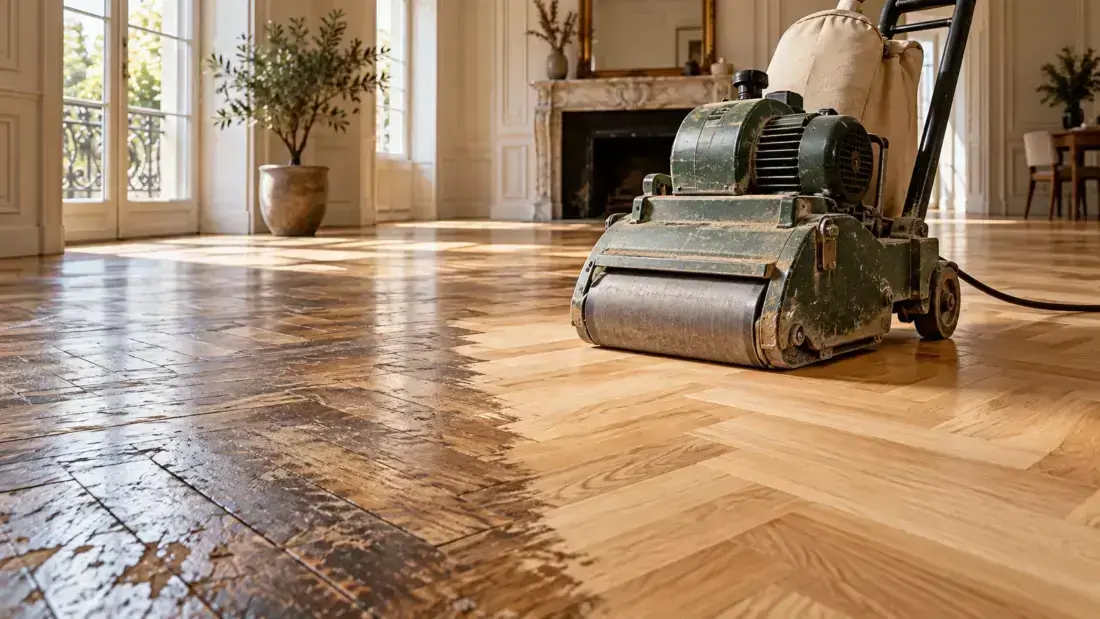
One of the most important stages of parquet refinishing is sanding the wooden surface. Specialized sanding equipment removes the worn upper layer, old varnish, and minor surface imperfections.
After sanding, the natural wood texture becomes visible again, and the surface is prepared for further treatment.
Want to Estimate Your Parquet Sanding Costs?
Enter your floor area and explore Datvale's online flooring calculators to plan the estimated cost of restoring your wooden floor.
Explore Flooring Calculators →3. Repairing Gaps and Damaged Areas
Older parquet flooring often contains small gaps or various forms of damage. In these situations, sanding alone may not be sufficient.
Where necessary, gaps are filled and damaged sections receive additional treatment. This stage can be an important part of professional parquet restoration.
What Is Parquet Restoration?
Parquet restoration involves more than simply sanding the surface. If individual sections of the flooring are damaged, loose, or significantly worn, they may need to be repaired or replaced.
The purpose of restoration is to preserve as much of the original parquet as possible while restoring its appearance and functionality.
Applying Varnish After Parquet Floor Restoration
After sanding and preparing the surface, one common finishing stage is applying protective parquet varnish. Varnish creates a protective coating that helps reduce everyday wear, dirt accumulation, and the effects of limited moisture exposure.
The final appearance depends significantly on the selected finishing product. Different levels of gloss and visual effects are available, so it is important to consider both the desired interior design and how frequently the floor will be used.
Proper varnishing can help extend the service life of restored parquet flooring.
Can Very Old Parquet Flooring Be Restored?
The age of the flooring does not automatically mean that it needs to be replaced. The actual condition of the wood and the stability of the floor structure are much more important.
In some cases, parquet flooring installed decades ago may still be in relatively good condition. After professional treatment, it can regain a significantly improved appearance.
Parquet Floor Restoration or New Parquet Installation?
The decision depends on the condition of the existing flooring. If the parquet is structurally sound, parquet floor restoration often allows you to preserve the original natural wooden floor.
If the damage is too severe, or the existing parquet can no longer be restored safely, installing new flooring may be necessary.
To estimate the cost of installing new traditional parquet, use Datvale's Parquet Installation Cost Calculator .
Three-Layer Engineered Parquet as an Alternative
If you decide to install new wooden flooring instead of restoring your existing parquet, three-layer engineered parquet is one possible option.
To plan the approximate installation budget, explore the Flooring Calculators and compare available flooring options.
How to Care for Parquet Flooring After Restoration
Properly completed parquet floor renovation is only the first stage. To preserve the result for as long as possible, regular maintenance is also important.
Avoid leaving excessive amounts of water on the surface, use protective pads under furniture legs, and choose cleaning products specifically designed for wooden floors.
You can explore flooring-related options and maintenance planning through Datvale's Flooring Calculators .
When Can Laminate Flooring Be an Alternative?
If the existing parquet can no longer be restored and installing new natural wooden flooring is not part of the plan, laminate flooring is a common alternative.
To estimate the material and installation costs of laminate flooring, use the Laminate Flooring Calculator .
How Often Can Parquet Flooring Be Refinished?
There is no single answer that applies to every floor. The possibility of refinishing parquet depends on the flooring type, the thickness of the usable wood layer, the number of previous sanding treatments, and the current condition of the surface.
Every sanding process removes a thin layer of wood. For older parquet floors, it is therefore important to determine whether another deep sanding can be performed safely.
How to Preserve Restored Parquet Flooring
For old parquet floor refinishing to provide lasting results, it is important to follow several simple maintenance practices.
- Do not leave standing water on the surface for extended periods.
- Use cleaning products specifically designed for wooden flooring.
- Place protective pads under furniture legs.
- Avoid dragging heavy objects directly across the floor.
- Address visible damage as soon as possible to prevent further deterioration.
How to Plan Parquet Floor Restoration Costs
Before starting a parquet restoration project, it is helpful to estimate the cost of treating a specific floor area.
The final price depends on the area, the extent of damage, the required repairs, the sanding work, and the selected final protective coating.
To plan your flooring budget, visit Datvale's Flooring Calculators and explore the available cost estimation tools.
Conclusion: Parquet Floor Restoration and Old Parquet Floor Refinishing
Parquet floor restoration can be a practical alternative to replacing an old wooden floor when the underlying structure remains in good condition.
Professional old parquet floor refinishing may involve sanding, repairing gaps, replacing damaged elements, and applying a new protective finish.
The right approach to parquet restoration depends on the extent of damage, while proper maintenance helps preserve the results of your parquet floor renovation.