


- EN
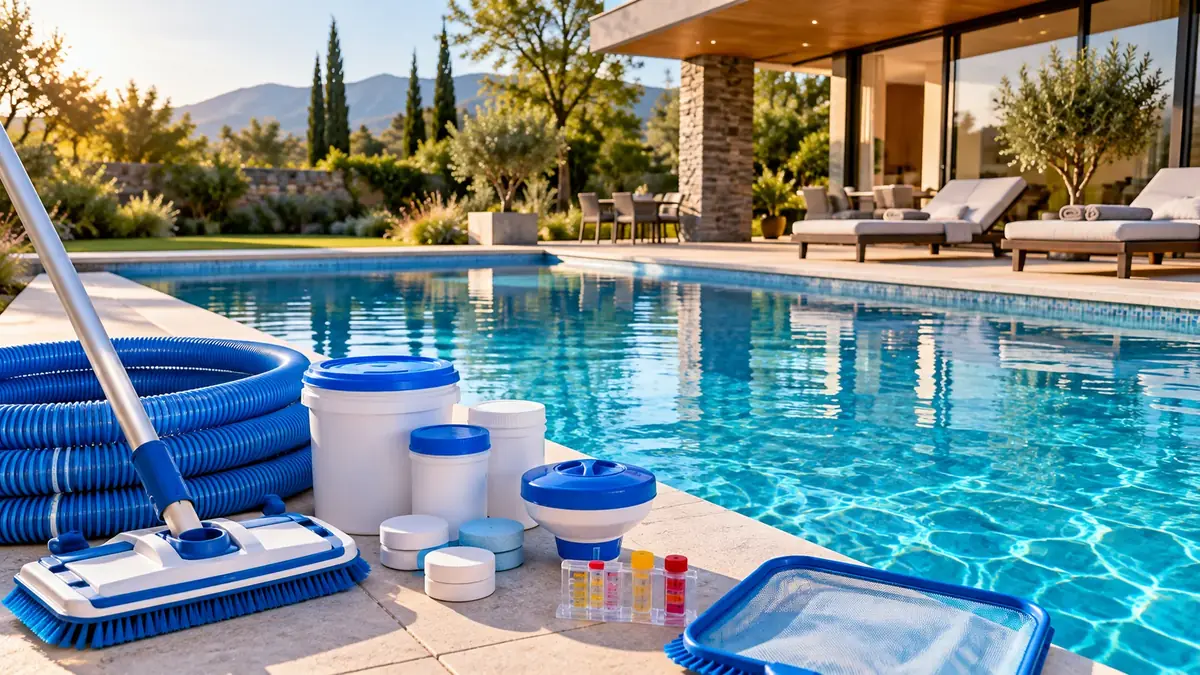
Pool water chemistry is the foundation of a clean and safe pool: without the right pH and chlorine levels, even the best filter cannot save you.
A clean, clear pool is about more than looks: in poorly maintained water, bacteria and algae multiply quickly. The good news is that regular maintenance is not difficult once you know what to do every day, every week and every season. In this guide, we explain everything step by step.
📌 To calculate your annual costs: pool maintenance cost calculator.
| Indicator | Normal range | What it does |
|---|---|---|
| pH | 7.2 – 7.6 | Chlorine effectiveness, skin and eye comfort |
| Free chlorine | 1 – 3 mg/l | Kills bacteria and algae |
| Alkalinity | 80 – 120 mg/l | pH stability |
💡 Check with test strips or a tester 2 to 3 times a week, and every day in hot weather or when the pool is heavily used.
In spring: remove the cover, top up the water, check the filter and pump, and shock the water.
In autumn (winterizing): lower the water level below the skimmer, drain the pipes to protect them from frost, and add winter chemicals and the cover.
The annual cost depends on the pool volume, the chemicals, electricity, and whether you do the maintenance yourself or hire a service. Calculate it with the pool maintenance cost calculator. If you are still planning to build a pool, use the pool construction calculator.
You can read more about water disinfection methods here. Properly balanced pool water chemistry also reduces your chemical costs.
| Product | Purpose |
|---|---|
| Chlorine tablets | Constant disinfection (with a floater or in the skimmer) |
| Shock chlorine | Fast treatment of green or cloudy water |
| pH- / pH+ | Acidity regulation |
| Algaecide | Algae prevention |
| Coagulant | Clearing cloudy water |
| Winter preservative | Protecting the water after the season |
⚠️ Never mix chemicals together, and always add the chemical to the water, not the other way around.
Salt electrolysis produces chlorine from salty water by itself: the water is soft, does not irritate the eyes, and you no longer need to buy chlorine, although the equipment is expensive. A UV lamp destroys bacteria with ultraviolet light and reduces the need for chlorine. Active oxygen is a chlorine-free disinfection method that is good for people with allergies, but it requires more frequent dosing in hot weather.
In the heat, chlorine breaks down 2 to 3 times faster, so test every day and add chlorine in the evening. Heavy rain changes the pH and brings in dust and leaves: after rain, check the pH, clean the skimmer and, if needed, shock the pool. A shock dose is also helpful after a big party or many swimmers.
In a 40 m³ pool at a private house, the owners came back from vacation to find the water green and cloudy. The owner first adjusted the pH to 7.4, then added shock chlorine, ran the pump for 24 hours and backwashed the filter twice. On the third day, a coagulant cleared the water completely. There was no need to replace the water, which saved a significant amount on water and chemicals.
📹 Video renovation tips: Datvale YouTube · 👍 News and discounts: Datvale Facebook
Usually 6 to 8 hours, so that all the water is filtered 1 to 2 times a day.
It is caused by algae, low chlorine or poor filtration. Shock chlorination is needed.
7.2 to 7.6. In this range, chlorine works best and the water does not irritate the skin.
With proper maintenance, the water rarely needs to be replaced completely, only once every 3 to 5 years. It is just topped up regularly.